
The Story
Why it exists.
The beginning
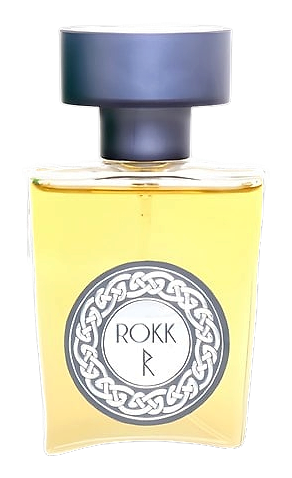
Rokk landed in 2019 from Rodrigo Lombardi and Ricardo Gomes, two perfumers who clearly weren't interested in playing it safe. The name suggests something compressed, ignited, a spark. The brief seems to have been simple: take the cool clarity of high-altitude air and trap it in a bottle long enough to feel what happens when warmth finds it. Lombardi and Gomes built Rokk from the top down, starting with an opening that's almost aggressive in its clarity before letting the composition breathe outward into something more generous.
What makes Rokk structurally unusual is the balance between cold and warm not as contrast but as sequence. The top notes arrive with an almost mentholated sharpness, eucalyptus and mint creating a sensation closer to standing in front of an open freezer than standing in a garden. The six-herb top accord, thyme, tarragon, clary sage alongside the mint and eucalyptus, is ambitious but disciplined. The citrus acts as a hinge rather than a star, brightening the herbs without dominating them.
The evolution
The opening hits hard and fast. Mint and eucalyptus arrive simultaneously, creating an immediate cold sensation on skin, not unpleasant, but unmistakable. Within five minutes the Sicilian lemon surfaces, cutting through the mentholated chill with a brief sunny note before the herbal layer takes over. Thyme and tarragon move in around the ten-minute mark, softening the sharpness into something more botanical. The heart arrives around twenty minutes in: fir balsam and lavender form the core, with a warmth that feels earned rather than forced. African geranium and black pepper keep it grounded and just slightly spicy. The drydown is where Rokk earns its name, amyris wood, coumarin, and patchouli create a warm, dry finish that stays close to skin for several hours. The base notes linger quietly, a clean warmth against vetiver and amber.
Cultural impact
Rokk, launched in 2019, opens with a mentholated-herbal composition that departs from conventional fragrance structures. The eucalyptus-forward top creates a sensation of clarity, while the six-herb accord brings botanical complexity that reads as both fresh and grounded. This approach to aromatic composition draws from a tradition of herbal and coniferous materials, sage, thyme, and fir balsam, that have appeared in perfumery for centuries, though here they are presented with a particular sharpness and immediacy.