
The Story
Why it exists.
The beginning
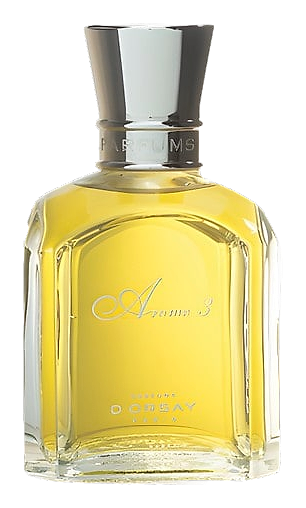
Arome 3 arrived in 1943 as a quiet act of refusal. While wartime restrictions compressed masculine fragrance into something minimal and forgettable, D'ORSAY held a different position. Lavender as a starting point. Citrus as brightness. Spices to complicate. Oakmoss to deepen. This was grooming as an argument, that a man's scent could be structured, aromatic, and unapologetically present without shouting. The bottle stayed modest. The formula didn't.
The note structure here is a fougère in the classical sense, which means lavender anchors everything, and in Arome 3, that lavender appears twice in the pyramid, top and heart. That's unusual. Most compositions use it once, as a bridge. Here it bookends the fragrance, giving the middle notes (coriander, clove, ylang-ylang) a lavender frame to play within. The citrus layer, bergamot, petitgrain, neroli, orange, doesn't compete with the lavender. It cuts through it, keeping the opening from going too heavy too soon. The drydown trades that herbal sharpness for mossy depth. Oakmoss, cedar, and a vanilla-tonka combination that feels warmer than expected from the opening.
The evolution
The opening doesn't ask permission. Lavender hits first, sharp and almost medicinal, then the citrus pile-on arrives, bergamot, petitgrain, neroli, orange all at once in a quick bright swirl. There's a green, slightly astringent quality that reads as almost clinical. Like a barbershop after the razor. This phase lasts maybe ten minutes before the spices start pushing through. Coriander and clove arrive quietly, supported by sage and myrrh, resinous, warm, a different register entirely from the opening. The ylang-ylang and jasmine keep the florals in check, almost hidden in the composition. By the second hour, the hand-off happens. The citrus is gone. The spices settle. What remains is oakmoss, amber, vanilla, and cedar, a drydown that smells like a well-worn leather chair in a gentleman's study. Not the same fragrance you started with. That's the point.
Cultural impact
Arome 3 arrived in 1943 as a quiet counterpoint to wartime minimalism, a time when masculine fragrance was often compressed into something simple and forgettable. Its lavender-citrus-spice structure represented a different ambition. Today it wears almost oppositely to current masculine fragrance trends, which has created a following among people who find mainstream offerings predictable. The house continues to produce limited runs from its Paris atelier, keeping the formulation in leather-bound notebooks that date to the 1800s. Those notebooks are why Arome 3 still smells like 1943.