
The Story
Why it exists.
The beginning
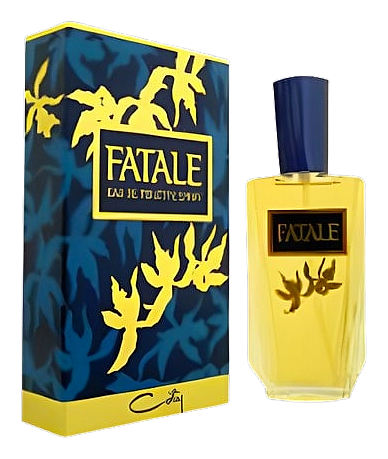
Fatale arrived in 1988 with a name that said everything. Coty, the house that invented modern perfumery's vocabulary with Chypre in 1917, understood that a fragrance called Fatale needed to earn the title. Not through sweetness or safety. Through presence. The white floral genre was crowded by the late eighties, many of them soft and approachable. Fatale took the opposite angle: lush, yes, but grounded in moss and green notes that kept the florals from floating away entirely. This was a fragrance that wanted to be remembered, not just liked.
What makes the structure unusual is the density of the heart. Seven floral materials, gardenia, tuberose, jasmine, rose, honeysuckle, carnation, narcissus, layered on top of each other. On paper that sounds chaotic. In the air it reads as abundance, not confusion. The oakmoss in the base is the real architect here: it gives the florals something to push against, keeps them from becoming purely sweet, adds that cool, almost mineral undertone that makes the composition feel grounded rather than heady. Sandalwood rounds the edges. Musk warms the close.
The evolution
The opening lasts perhaps ten minutes, green, bright, already slightly wild. Then the white florals arrive all at once and stay. Gardenia leads, tuberose follows, jasmine threads underneath, and for the next three to four hours the fragrance is a continuous bloom, rich and warm without ever turning powdery. The drydown is where the oakmoss takes over. It doesn't replace the florals, it darkens them, adds earth and shadow. Sandalwood and musk arrive last, settling into skin like a warm exhale. The entire arc runs six to eight hours on most skin. On fabric, longer. The next morning there's a faint warmth at the wrist, amber and something almost animalic, that suggests the fragrance hasn't fully left.
Cultural impact
Fatale sits in a specific moment: late eighties, white florals at their most maximalist, but with the mossy grounding that distinguished Coty's approach from the softer flankers of the era. It drew from the same sensibility that produced Emeraude and Chypre, warmth without softness, presence without aggression. What set it apart was the willingness to let the florals be confrontational. In the context of 1988, that was a statement. Today it reads as a reminder of what bold actually means.