The Story
Why it exists.
The beginning
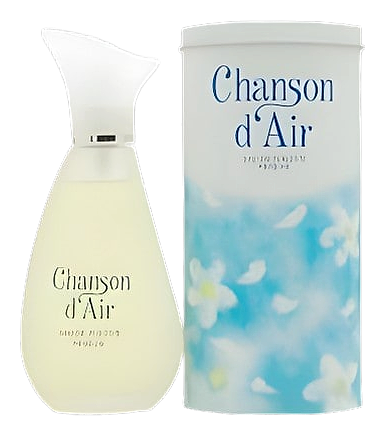
Chanson d'Air arrived in 1998 from Coty, a house with a long history in fragrance. Where earlier compositions from the brand defined categories, Chanson d'Air went a different direction. It aimed for something lighter, more ephemeral, a white floral built to feel like atmosphere rather than statement. The name itself does most of the work. Air. Movement. A breath of something that passes through rather than lands on you. It is a quiet counterpoint to the denser florals of the era, meant to be worn close and felt rather than announced. The composition reads as an exercise in restraint, a fragrance that trusts its own lightness and refuses to compensate with heavier base notes.
What makes Chanson d'Air structurally interesting is the sheer density of its heart. Six florals share the middle phase: freesia, jasmine, lily of the valley, magnolia, orange blossom, and rose. That kind of stacked white-floral construction was a deliberate Coty move, building softness through layering rather than relying on a single dominant bloom. Bergamot and grapefruit do the brightening work up top, while sandalwood and amber anchor the composition without dragging it into territory. The result is a floral that never tips into indolic territory. It stays translucent, almost sheer, with the aldehydic lift giving it a cool, sparkling edge that separates it from heavier 1990s florals.
The evolution
The opening of Chanson d'Air is bright and immediate. Bergamot cuts clean, grapefruit adds a faint bitter edge, and aldehydes give everything a sparkling, almost metallic sheen that catches the light. It is the most overtly effervescent phase, the moment when the fragrance announces itself with a burst of citrus and a cool, soapy lift. The florals arrive quickly, and they come as a wall rather than a procession. Jasmine and orange blossom lead, with the softness of lily threading through the composition. Freesia and magnolia add a lemony brightness that keeps things from turning too heady or indolic. Around the 2-hour mark, the white petals start to recede. Sandalwood begins to surface, warm and creamy, pulling the composition closer to skin and grounding what was once airborne. Amber rounds out the base, adding a soft golden warmth that lingers.
Cultural impact
Chanson d'Air sits in a specific corner of late-1990s fragrance: the clean, sheer white floral that defined a generation of compositions aimed at everyday wear. Coty was creating something polished for daily life rather than evening drama, a white floral designed to be approachable and unintimidating. Its name and structure place it firmly in the category of scents built around the idea of air and movement, compositions designed to feel like atmosphere, like cleanliness, like a breeze passing through.