
The Story
Why it exists.
The beginning
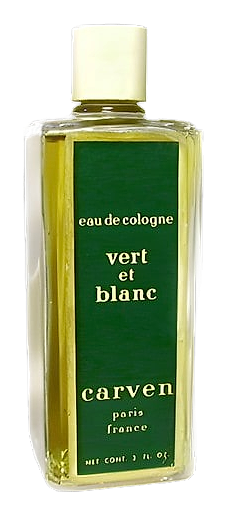
Expo 58 gave Carven a stage. The Brussels World's Fair ran from April to October 1958, drawing millions to see what France, and Paris, wanted to say about the future. The fragrance that emerged carried that same sense of occasion, a composition that opened with bright aldehydic sparkle before revealing its green heart. The top notes shimmer with a clean, almost soapy brightness characteristic of the era, while the green notes that follow bring an herbal sharpness that cuts through the initial brilliance. What follows is a journey from that sparkling opening through a floral heart to a grounded, earthy base.
What makes the structure unusual is how the green doesn't surrender gracefully to the florals. Galbanum and clary sage arrive sharp and stay sharp through the opening act. The jasmine and gardenia don't so much soften the green as exist alongside it, a conversation between cool clarity and warm creaminess. The cinnamon in the heart is the surprise guest: warm, slightly spiced, pulling the composition toward something more intimate than its opening suggested. This isn't a linear fragrance. It's a negotiation.
The evolution
The aldehydes hit first, bright, shimmering, almost soapy in that mid-century way. Within minutes, the green notes take over. Galbanum cuts with that bitter, almost medicinal precision while clary sage adds an herbaceous counterpoint. The heart arrives with gardenia's creamy white petals and jasmine's indolic warmth, but the cinnamon is the real character here, a spice that smells like the memory of warmth, not heat itself. Oakmoss and vetiver gradually settle everything into earth, their presence becoming more pronounced as the brighter top notes fade. The benzoin and styrax give it a resinous, almost leathery base that lingers close to the skin, its warmth revealing itself slowly as the fragrance develops.
Cultural impact
Created for Expo 58 in Brussels, Vert et Blanc arrived during a significant moment for French perfumery. The green chypre structure placed it within a respected tradition while the aldehydic opening brought modernity. Vintage collectors who track down surviving bottles describe it as complex, slightly bitter, and distinctly mid-century, a time capsule that still holds its own. The fragrance captures something of that postwar optimism, when designers were ready to look forward again.