
The Story
Why it exists.
The beginning
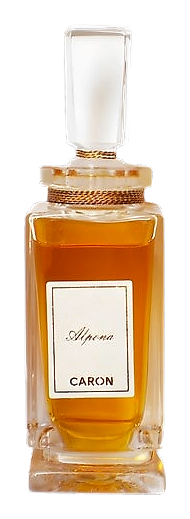
Alpona was Ernest Daltroff's mountain letter. Created in 1939, it takes its name from the French Alps, those jagged, snow-tipped peaks that don't ask permission to exist. Daltroff, the self-trained perfumer who built Caron on instinct and collision, was drawn to extremes. The Alps are exactly that: raw altitude, sudden beauty, cold stone warming in sudden sun. He wanted a fragrance that carried that same confrontation, the mineral sharpness of height meeting something lush and alive. What he got was a chypre that didn't apologize for any of it.
The note structure is where Alpona earns its reputation. Daltroff paired flowers, jasmine, orchid, rose, with grapefruit, a combination no one had attempted before 1939. The move was radical: florals usually soften a composition, but here they tangle with bright, almost bitter citrus instead. Add thyme to the heart, and the whole middle section behaves more like a mountain meadow than a garden. Thyme doesn't perfume. It grounds. It reminds you that something is growing, not just blooming. Meanwhile, oakmoss anchors everything to stone. The result is a citrus that climbs instead of fades, one of the most original the category has ever produced.
The evolution
The opening hits immediately: bergamot and lemon cut clean through the air. No softness. No preamble. Orange arrives next, rounder, but the trio stays sharp, like cold air on bare skin. Within the first hour, the heart takes over. Thyme pushes through the citrus, herbal and almost savory. Jasmine and rose follow, but they're not docile here. They argue with the herbs, creating a tension that feels alive. By the second hour, the citrus recedes entirely. Cedar and sandalwood emerge, warm and dry, while oakmoss settles close to the skin, cool, mineral, slightly earthy. Patchouli adds depth. Musk and myrrh linger underneath, adding a resinous quiet that stays for hours. Six hours in, on most skin, the woody chypre base is still present, close and intimate. The next morning? A faint trace on fabric, stone dust and something green.
Cultural impact
Alpona carved an unusual path in the 1939 fragrance landscape. While contemporaries leaned into powdery aldehydes or single-flower soliflores, Daltroff went structural: a citrus that behaved like a chypre, flowers that argued with herbs, oakmoss that stayed close instead of projecting. The grapefruit-floral combination was genuinely new. Wearers who returned to it decades later describe the same quality: a fragrance that sounds different depending on where you encounter it, sharp at the start, green in the heart, mineral at the close. It's the kind of complexity that rewards attention rather than announcing itself.