The Story
Why it exists.
The beginning
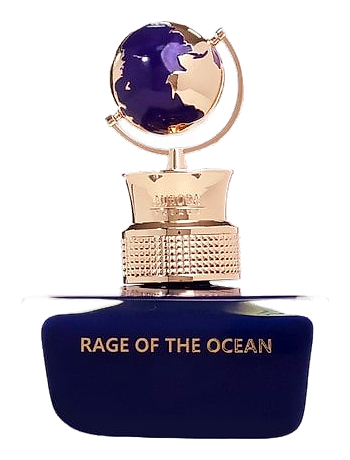
Rage Of The Ocean arrived in 2022 as part of Aurora Scents' Globe Collection, a line built around the idea that geography carries its own scent signature. The fragrance was composed by perfumer M.H Gerashi, who set out to bottle the contradiction at the heart of any coastline: the violence of waves meeting rock, the stillness of horizon. The Globe Collection treats the planet as a perfumer's map, and Rage Of The Ocean claims the open water. What makes it interesting is the structure of the composition: citrus and spice play against marine notes and cedar, then everything grounds itself in driftwood and ambergris. The grapefruit and mandarin in the opening bring a sharp, sun-warmed brightness, while the ginger cuts through with a real, almost peppery heat.
What separates this from the usual wave-inspired fare is the interplay between ginger and incense in the opening. That choice gives the citrus top a smoky undertow before the water even arrives, a sharpness that cuts through the brightness rather than softening it. Then the cedar and rose in the heart create an unusual tension: cedar's dry woodiness against rose's softness reads almost like weathered timber and something blooming tangled together. The ginger loses its bite as the marine notes come forward, and the incense fades into the background, leaving the heart to do its quieter work.
The evolution
The opening is loud, grapefruit and mandarin cracking open over a sharp ginger note that has real bite, with incense threading underneath like distant smoke. The citrus here is not shy. It announces itself, bright and almost tart, before the ginger cuts in with a heat that catches in the back of the throat. As the first phase passes, the marine notes arrive and shift the whole register cooler. The ginger pulls back, the incense fades, and salt and water take over the conversation. Cedar enters quietly during this transition, and the rose shows up later than expected, almost hiding behind the cedar for a while. Eventually the composition settles into its true character: the driftwood and ambergris base doing the heavy lifting, with the marine notes still present but no longer dominant. The drywood character is what surprises most.
Cultural impact
Rage Of The Ocean sits in an interesting place within the aquatic category because of how it handles its contrast. The marine notes are present enough to anchor it as a coastal fragrance, but the incense opening and the rose-cedar heart give it depth that keeps it from reading as one-dimensional. The incense especially shifts the character away from the cleaner, more straightforward aquatics that lean entirely on salt and ozonic effects. Instead, this one carries warmth and smoke from the first spray, which softens what could otherwise feel like a cold composition.