
The Story
Why it exists.
The beginning
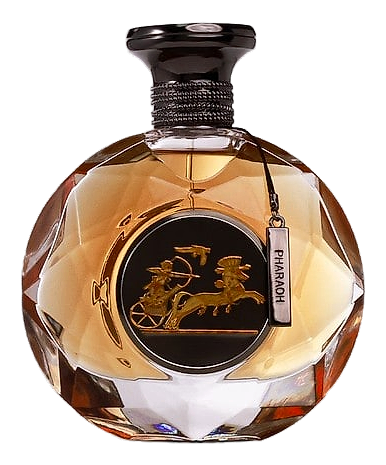
Pharaoh didn't arrive by accident. Aurora Scents built four decades of quiet craft before this scent appeared, and the name carries weight the composition has to match. M.H Gerashi looked to ancient Egypt, not for decoration, but for structure. The pharaohs weren't subtle. Neither is this fragrance. But the real decision was to anchor something loud in something lasting. A single heart note of lavender does the bridging work: it cools the opening spices without silencing them, and it opens into the base rather than standing apart from it. The goal was a fragrance that moves through a room the way a figure moves through a court, not demanding attention, but impossible to ignore once noticed.
What makes Pharaoh unusual is the lavender placement. In most warm-spicy compositions, lavender appears early or not at all, it fades fast and tends to read sharp in the first minutes. Here, it functions as a transition layer, arriving after the top spice accord has settled but before the base fully asserts itself. The result is a bridge: the warmth of the opening doesn't vanish so much as it deepens into something herbal and measured. The spice doesn't disappear. It becomes architecture rather than announcement. That's a harder thing to build than a straightforward accord, and it's the reason Pharaoh rewards wearing rather than simply sniffing.
The evolution
The first five minutes are all signal. Nutmeg and cardamom arrive together, with cinnamon adding a sharp, almost resiny edge, this is not a polite opening. From a distance it reads as warm and spicy; up close it bites. The review that called it 'strange and almost biting up close' was onto something. It's intentional. Then the lavender enters, not gently but with certainty, and the bite softens into something herbal and cool. That herbal-spicy phase holds for two to three hours. Cardamom and nutmeg continue to assert themselves throughout, keeping the composition from going flat. As the drydown arrives, patchouli and Haitian vetiver take over, the earthiness of the base anchors everything that came before. Sandalwood and amber round the final hours into something warm and resinous. On skin, this lasts a full workday. On fabric, it holds into the next morning as a quiet, dusty echo of vetiver and patchouli.
Cultural impact
Pharaoh occupies a distinct space in the warm-spicy oriental-woody category. Among similar-gender releases from independent British houses, it stands out for the intensity of its opening and the decisiveness of its drydown. Wearers describe it as the kind of scent that announces a presence without requiring explanation, useful in evening settings, compelling in cooler seasons, and distinctive enough to hold attention without overwhelming. It's not trying to rival niche exclusives at several times the price; it's doing its own work in accessible territory.