The Story
Why it exists.
The beginning
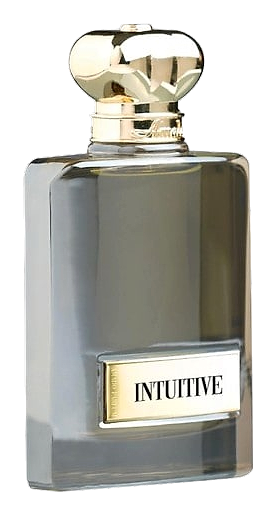
Intuitive came from Christian Provenzano's bench, and the name does most of the explaining. Not a reference, not a destination. Just a claim about how the wearer moves through the world. The kind of scent that suggests the decision was already made before you entered. Provenzano built it around a tension he clearly liked: fruit softness at the top, powder and resin holding the ground underneath. You catch candied peach and bergamot first, the kind of opening that flickers between ripe and almost-ripe, before osmanthus pulls the fruit into something fuzzier, more apricot-suede than stone-fruit-bright. Then the florals take over and the fragrance starts reading less like what you put on and more like what you already smell like.
What makes Intuitive worth a second look isn't any single note. It's the negotiation between osmanthus and iris, two materials that both traffic in a fuzzy, skin-close kind of sweetness. Osmanthus brings apricot and a leathery, almost suede-like depth. Iris brings root powder, that violet-tinged mineral cool. Stacked, they cancel out their respective sweetness and leave something drier, more architectural than either alone. Tuberose enters the heart carrying most of the weight, but it's been tamed. No green sting, no camphoraceous edge. Just a creamy, slightly carnal bloom. Narcissus adds a sharp animalic flicker behind it, the kind of note that pushes the whole heart closer to skin.
The evolution
The opening minutes are fruit, but a fruit that's been starched. Peach comes in candied, then bergamot cuts the sugar sideways, then osmanthus folds everything into a kind of fuzzy apricot suede. There's a brightness to the opening that suggests something lighter than what comes next. The first act closes out quickly, the fruit retreating while the florals step forward. Tuberose wakes up, narcissus adds a slightly dirty flicker, and the rose starts doing its connective work. This is when Intuitive stops reading as fruit and starts reading as skin. The powder note, which has been sitting underneath the whole time, lifts. Iris does what iris does. It turns the whole composition grey-violet, almost photographic in its clarity. The heart stage is where the fragrance earns its name. Nothing about it reads as effortful, but every note seems to know exactly where it should be.
Cultural impact
Intuitive reads as a power-floral that doesn't want to call itself one. The narcissus and iris pairing gives it an old-fashioned, almost couture cast, which is part of its pull for fragrance people who already own a shelf of orientals. Wearers tend to describe it as closer to couture than to anything louder, a composition that flatters the skin rather than the room. It carries a certain quiet authority, the kind of scent you wear when you've already decided what you want to smell like. The composition rewards attention without demanding it, settling into a personal space rather than projecting outward.
The House
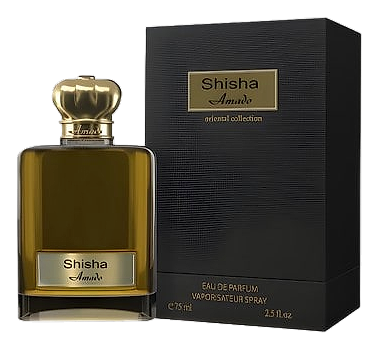
AmadoAmado is a niche fragrance house rooted in French perfumery tradition and currently operating from the Kingdom of Saudi Arabia. Since launching its first compositions in 2014, the brand has built a catalog of approximately forty fragrances, spanning oriental oud creations, floral extracts, and musc-led compositions. The house collaborates with established perfumers, most notably Claire Paulson, who brought over three decades of experience to the brand's flagship Blue Incense. Amado positions itself at the intersection of European formulation expertise and Arabian olfactory heritage, a duality that shapes its ingredient choices and creative direction.
The Creator
Christian ProvenzanoFrom the fragrances attributed to him, a penchant for rich, opulent compositions emerges. He's likely drawn to warm, sensual notes like amber, musk, and vanilla, often paired with exotic spices and precious woods.