The Story
Why it exists.
The beginning
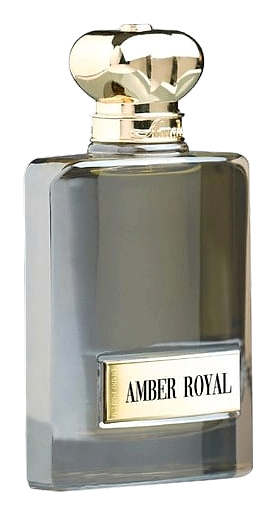
Amber Royal arrived in 2017, composed by Christian Provenzano. The brief seems built on contrast: a saffron-led oriental that balances its materials without tipping into excess. The name promises grandeur. The execution delivers something quieter and more deliberate, the kind of royal weight that doesn't need announcement. There's a confidence in the composition, a willingness to let dense, resinous materials speak at their own pace rather than rushing toward impact. What emerges is a fragrance that wears its richness without performing it, the saffron threading through the structure like a steady current rather than a flash of color. It's an oriental in the classical sense, but one that's been refined by a hand interested in texture and restraint as much as raw opulence.
What makes Amber Royal worth noticing is how it balances saffron's metallic bite against neroli's lift. Most saffron-led orientals lean heavy from the first spray. This one opens with daylight. Nutmeg underneath gives it a dry, almost savory edge before the rose arrives, and the rose itself isn't a soliflour. It's threaded through amber and artemisia, which gives it a faintly herbal, almost medicinal coolness. That counterweight is what keeps the composition from collapsing into sweetness.
The evolution
Saffron and neroli spar for attention in the opening while nutmeg sits underneath, adding a dry warmth that gives the composition its initial grip. Rose enters as the top notes settle, but it's not the smooth, powdery rose most orientals rely on. The artemisia wraps it in something bitter-green, almost medicinal, lending the heart an herbaceous counterweight that keeps the rose from collapsing into sweetness. The amber itself brings warmth, not from any added sugar but from the resin's own density. As the base takes over, sandalwood grounds everything with its creamy density, styrax adds a leathery, almost smoky resin note, and vanilla rounds the edges without tipping into dessert territory. What lingers is the styrax-vanilla-sandalwood trio, warm and slightly sweet, reading more like the smell of skin that's been somewhere interesting than any single note.
Cultural impact
Amber Royal lives in the quieter corner of the oriental-spicy category. That relative anonymity is part of its appeal for the wearers who find it. The ones who commit describe it as a cold-weather signature rather than a rotation piece, a scent with enough density and warmth to anchor a season. It rewards patience, both in how it's composed and in how it's worn, and it tends to attract people who value material over marketing. The fragrance doesn't chase trends or try to land on any year-end list. It simply exists, doing what it was built to do, which is exactly the kind of positioning that lets a composition this dense find its people.
The House
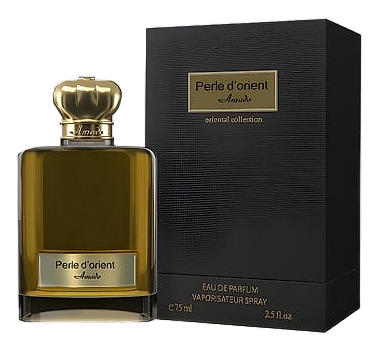
AmadoAmado is a niche fragrance house rooted in French perfumery tradition and currently operating from the Kingdom of Saudi Arabia. Since launching its first compositions in 2014, the brand has built a catalog of approximately forty fragrances, spanning oriental oud creations, floral extracts, and musc-led compositions. The house collaborates with established perfumers, most notably Claire Paulson, who brought over three decades of experience to the brand's flagship Blue Incense. Amado positions itself at the intersection of European formulation expertise and Arabian olfactory heritage, a duality that shapes its ingredient choices and creative direction.
The Creator
Christian ProvenzanoFrom the fragrances attributed to him, a penchant for rich, opulent compositions emerges. He's likely drawn to warm, sensual notes like amber, musk, and vanilla, often paired with exotic spices and precious woods.