The Story
Why it exists.
The beginning
Barnabé Fillion designed Miraceti as a study in contradiction for Aesop's Othertopias collection, where each fragrance conjures a landscape that exists only in the imagination. The brief was simple on paper: capture the collision of heat and sea. Fillion spent months reconciling these opposing forces, ultimately building the perfume as a series of negotiations between fire and water, spice and ocean.
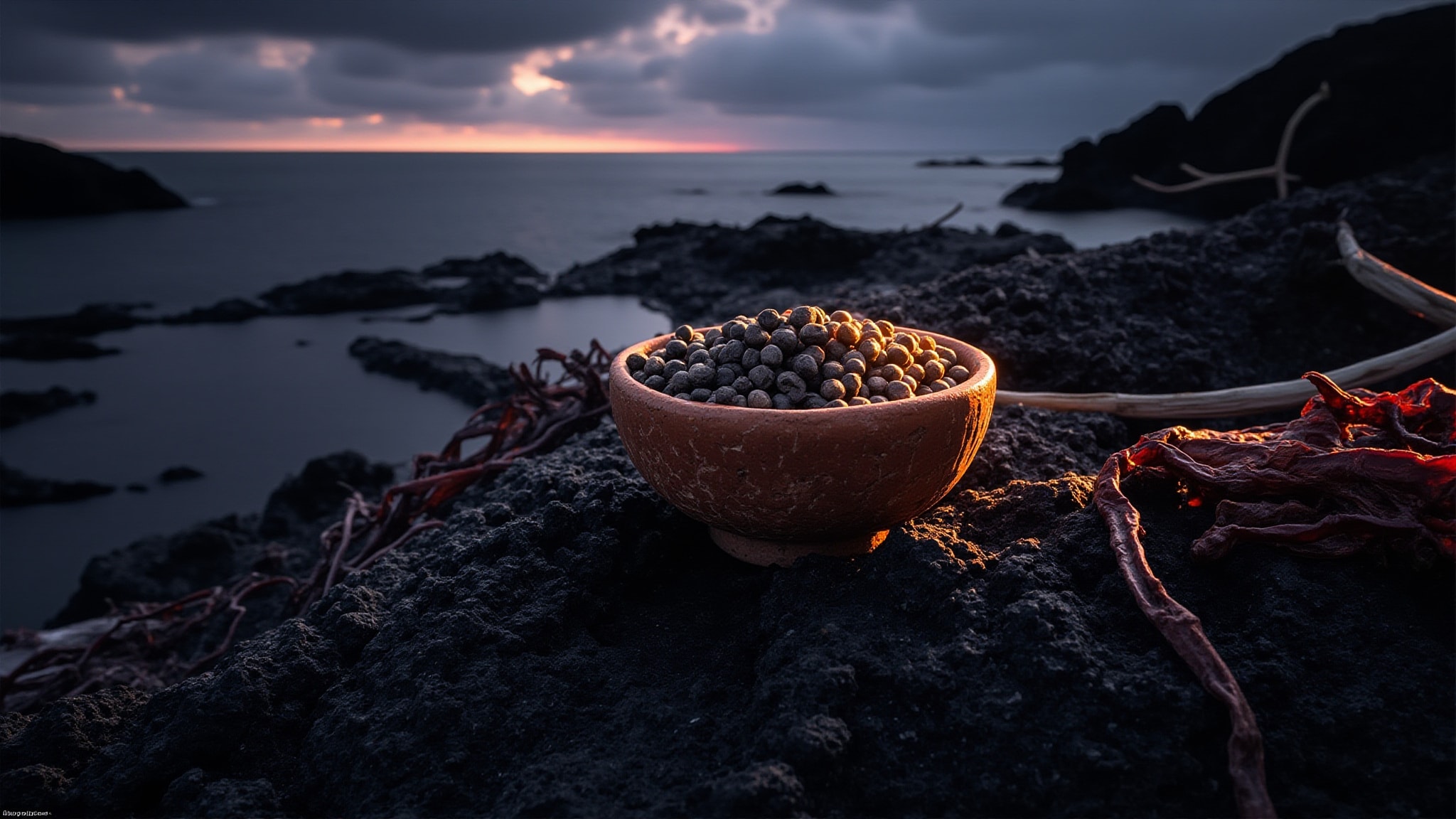
Each note was chosen not for its individual beauty but for its ability to negotiate with its neighbors. Black pepper had to surrender gracefully to mate. Ambrette had to bridge herb and resin without becoming sweet. The red kelp in the base anchors everything with its marine salinity, reminding wearers that beneath the spice and resin, the ocean persists.
The evolution
The fragrance begins with controlled violence, black pepper and chili leaf creating a sensation of heat against skin before mate's herbal bitterness distributes the burn. As the top subsides, the three heart materials work in concert, ambrette softening the transition into warmth, styrax adding complexity through its sweet-smoky resin, and labdanum providing the sticky, ancient amber that deepens everything. Myrrh and cedarwood arrive to construct the finale, their balsamic-woody constellation holding ground for hours, red kelp ensuring the sea element remains audible throughout.
Cultural impact
Since its 2021 debut, Miraceti has sparked conversation among niche‑fragrance enthusiasts for its daring blend of peppery spice and marine kelp. Wearers note its ability to sit comfortably in both office and weekend settings, while reviewers often compare its green‑oriental profile to Zoologist’s Squid (2020) and Acqua di Sale (2019). Its modest sillage and moderate longevity have made it a quiet favorite for those seeking a scent that feels both adventurous and understated.