The Story
Why it exists.
The beginning
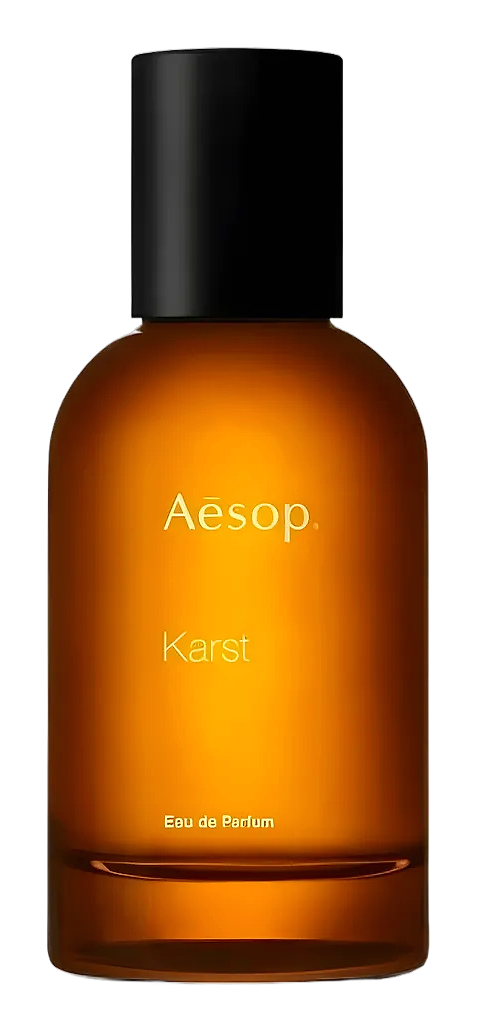
Karst takes its name from a geological formation, limestone carved by wind and sea along coastlines into something dramatic and austere. Released in 2021 as part of the Othertopias Collection, it was composed by Barnabé Fillion. The Othertopias name signals Aesop's habit of naming fragrances after places that exist somewhere between geography and imagination. Karst is one of those places: visible in coastlines from Dalmatia to Vietnam, where stone meets relentless water and something sharp and mineral forms in the exchange. The fragrance translates that specific tension, marine without sweetness, fresh without softness, into a wearable form.
The structure is unusual for a fresh fragrance. Instead of building toward sweetness or softness, Karst peaks in its middle act and then retreats rather than blooming. The juniper and bergamot opening is bright and clean, yes, but the pink pepper underneath adds a warmth that prevents it from reading as sterile or soapy. Then the heart arrives: rosemary and sage, which are herbs more associated with food and medicine than perfumery's romantic associations. They give the fragrance an almost bitter quality, a green sharpness that feels functional rather than decorative. The cumin is where opinion splits.
The evolution
The opening hits clean, juniper, bergamot, a whisper of pink pepper. The bergamot reads bright for the first fifteen minutes before the herbal heart crashes in. Rosemary and sage take over, and for the next hour the composition lives in that green-herbal space, slightly bitter, slightly medicinal. The marine element doesn't disappear but retreats, more implied than announced. The cumin surfaces around the ninety-minute mark, adding depth beneath the herbs. This is where the fragrance either wins you or loses you. The base arrives quietly, vetiver first, mineral and earthy, then cedar and sandalwood arriving late to add warmth without sweetness. The drydown sits close to the skin. The vetiver lingers longest, that mineral-earth quality present even after everything else has faded. This is a fragrance that stays intimate rather than announcing itself across a room, which is exactly the point.
Cultural impact
Karst occupies a specific position in the fresh fragrance conversation. Where most marine fragrances aim for universal appeal, Karst leans into mineral-herbal specificity that divides opinion and builds devotion. It's the fragrance for someone who finds typical aquatics too safe and needs something with more character. The Othertopias Collection suggests Aesop's ongoing interest in fragrance as geographical and conceptual exploration rather than seasonal trend-following.