
The Story
Why it exists.
The beginning
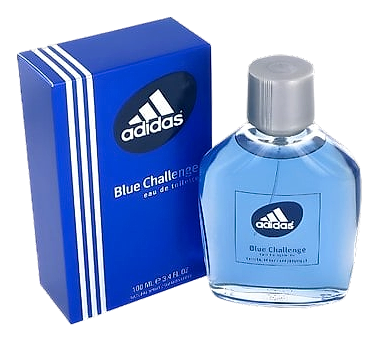
Blue Challenge arrived in 1997 as part of Adidas's growing fragrance line. The name suggested something direct, a proposition to the idea that mass-market fragrance couldn't feel thoughtful. The brief was simple: clean, energetic, built to move. Citrus oils opened sharp and bright, with herbs lending their green, slightly bitter edge. The blend felt immediate, the kind of scent that doesn't ask for your attention but gets it anyway. Lemon and bergamot established a crisp foundation while herbaceous notes added complexity underneath.
What makes Blue Challenge unusual is its structure. Geranium and jasmine sit between the bright opening and the woody base, giving the scent an unexpected floral core. The heart introduces a layer of floral weight that most sport fragrances skip entirely. This middle act adds perfumery depth without losing the energetic character that defines the fragrance. The result is a scent that carries more nuance than a straightforward sport fragrance typically offers.
The evolution
The opening hits immediately: lemon and bergamot, sharp and direct. Mandarin orange sweetens it slightly, but this is a no-nonsense citrus first impression. The blend reads clean and bright, the kind of opening that feels purposeful. As the citrus begins to recede, the floral heart emerges. Geranium leads, but jasmine and cyclamen carry weight. Green notes like juniper, petitgrain, and pine give it an herbal lift. The drydown arrives next: cedarwood and vetiver form a clean, dry woody base. Amber and musk add warmth without heaviness. Moss grounds it with something almost mineral.
Cultural impact
Blue Challenge belongs to a moment when sports fragrance was finding its footing. Community reviews describe it as fresh and clean, with strong citrus and green notes. The synthetic-aquatic accord gives it a distinctive character, a cool water-like quality that sets it apart from purely natural compositions. Some wearers find its straightforward approach comforting, while others appreciate its directness in a market full of complex, layered fragrances.