Pink Roses
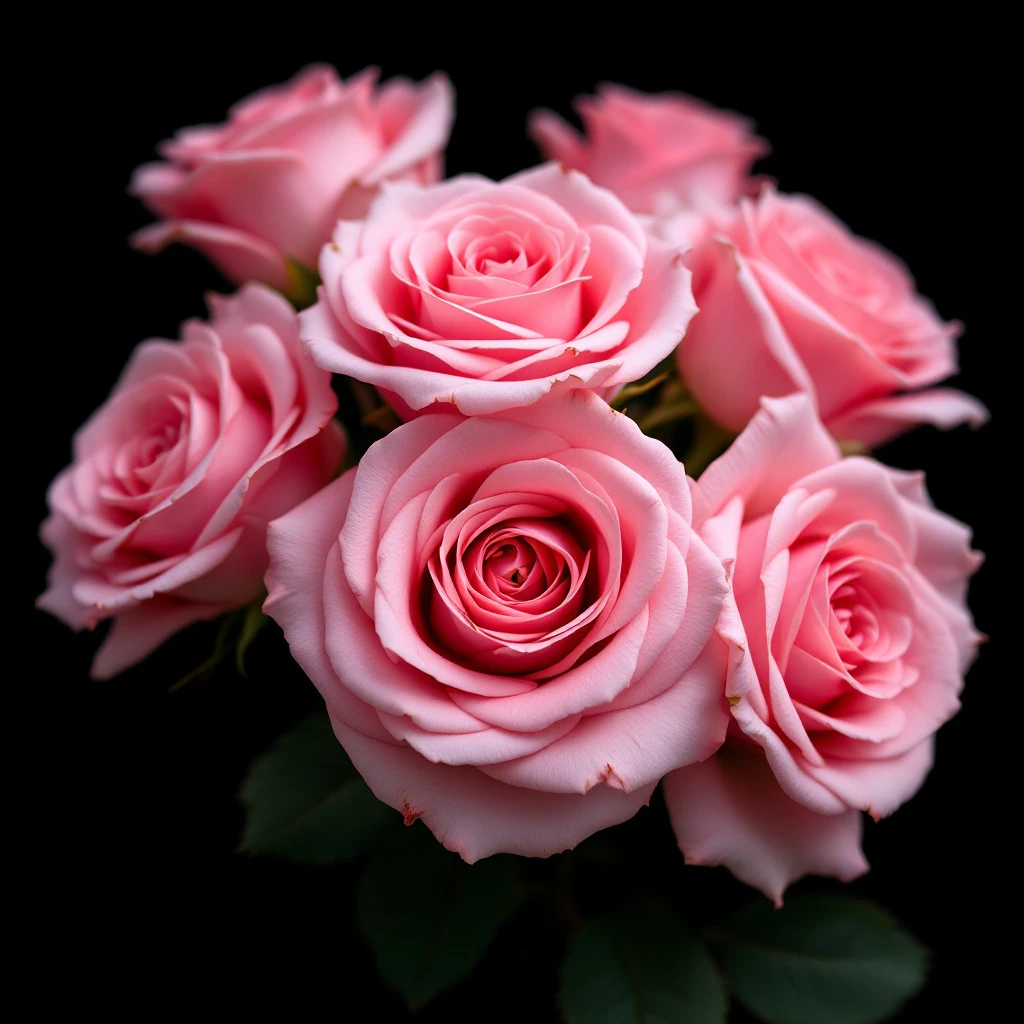
Pink roses carry a softer, dewy sweetness that distinguishes them from their deeper red and white counterparts. Their scent reads honeyed, watery, and gently green, with a powdery lift that brightens the heart of any composition.
Character
How it smells
The dewy heart of modern rose perfumery
It takes roughly 1,000 pounds of rose petals to produce a single ounce of rose absolute, making it one of the most labor-intensive natural extracts in perfumery.





Origin
Iran
Roses have perfumed human civilization for at least five thousand years. Archaeological evidence places rose cultivation in China around 5,000 years ago, while ancient Persians, Egyptians, Greeks, and Romans incorporated rose petals into unguents, oils, and ceremonial balms. The earliest documented rose distillation traces to seventh-century Persia, where the physician Avicenna reportedly refined a still capable of capturing the flower's essential oil.
By the tenth century, rose water was a traded commodity across the Islamic world, used in cooking, medicine, and religious ritual. The Ottoman Empire transformed this tradition into industry. In the 17th century, rose cultivation spread to the Balkans, where the town of Kazanlik in what is now Bulgaria offered ideal conditions: sandy soil, morning mist, and mild winters.
By the 19th century, Bulgaria dominated global rose otto production, a position it retains today. The Damask rose itself likely arose from a natural hybrid of Rosa gallica and Rosa moschata sometime around the 16th century. Pink and pale-magenta varieties became the preferred cultivar for oil extraction because their chemical profile yields a richer, more balanced composition of citronellol, geraniol, and nerol than red or white roses.
Wears it best
Fragrances featuring Pink Roses
Brands
Brands known for Pink Roses
Good to know
Questions, answered
The essentials on Pink Roses in perfumery: how it smells, where it comes from, and how it behaves on skin.
What does pink rose smell like in perfumery?
Pink rose offers a soft, dewy sweetness with honeyed, watery, and lightly green facets. Compared to red rose, it reads fresher and more transparent, often carrying a powdery lift that gives compositions a luminous, airy quality.
Which rose species produces pink rose fragrance oil?
Rosa damascena, the Damask rose, is the primary species. Its pink-to-magenta blooms yield the prized rose otto and rose absolute used in most fine fragrance formulations worldwide.
Is pink rose essential oil expensive?
Rose oil ranks among the costliest natural perfume materials. It requires approximately 3,000 to 5,000 kilograms of fresh petals to produce one kilogram of rose otto, driving the price of pure oil into the thousands per kilogram.
What is the difference between rose otto and rose absolute?
Rose otto is produced by steam distillation of fresh petals and yields a pale yellow oil with a fresh, honeyed aroma. Rose absolute is obtained through solvent extraction and appears as a deep red, thicker substance with a warmer, jammy character.
Where is the world's pink rose oil produced?
Bulgaria's Valley of Roses near Kazanlik remains the leading source, with significant production also in Iran, Turkey, and Morocco. Bulgaria has held this position since the 17th century due to its ideal climate and soil.
When was rose oil first distilled?
Rose oil distillation originated in ancient Persia, with the earliest documented refinement attributed to the physician Avicenna around the 10th century. Persia remained the primary center of rose oil production for several hundred years.
Are pink roses and red roses chemically different?
Color alone does not determine chemical profile, but Damask roses with pink petals tend to contain higher concentrations of citronellol and geraniol. White and deep red rose varieties generally produce less oil with a different aromatic balance.
Why is pink rose so popular in luxury perfumery?
Pink rose bridges the warmth of classic rose with a modern, dewy transparency that suits contemporary compositions. Its versatility allows perfumers to use it as a heart note in florals, chypres, orientals, and fresh fragrances alike.




