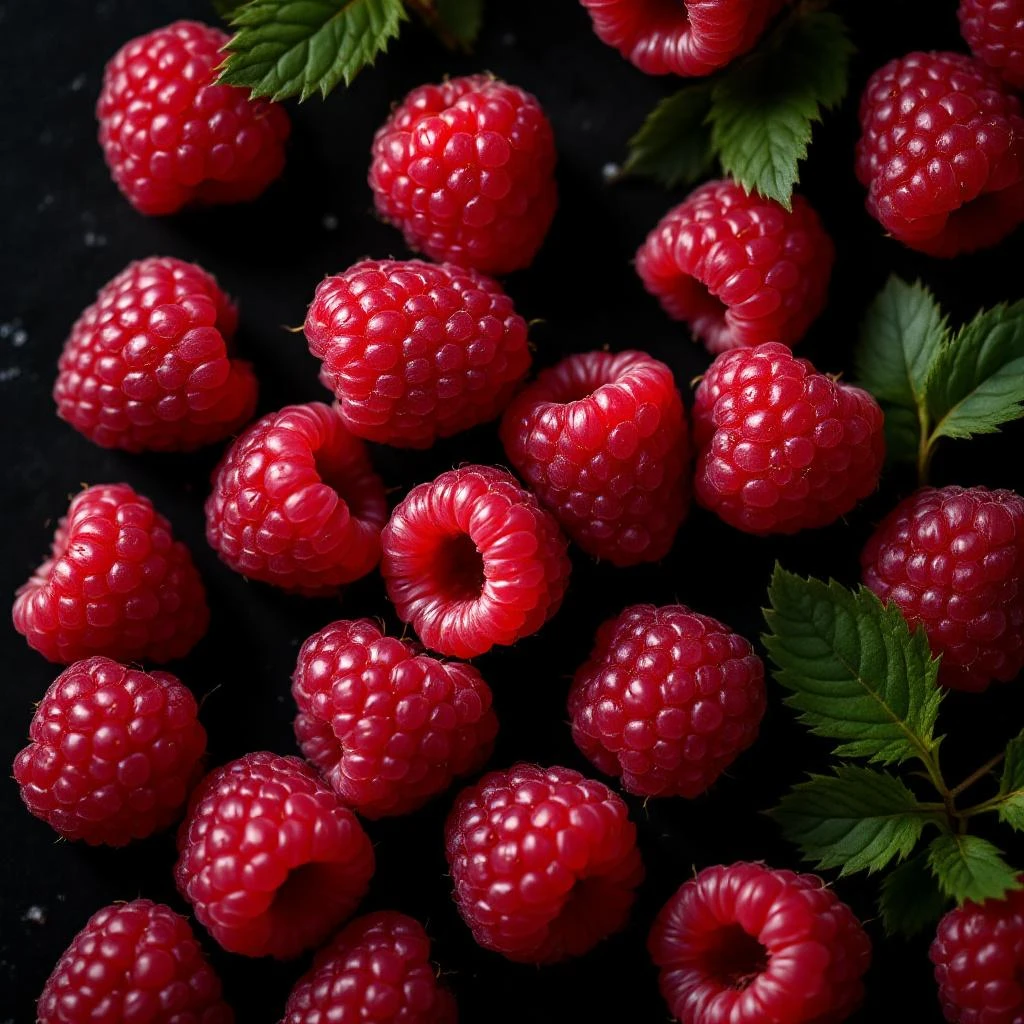
Dried Raspberry
Dried raspberry is where perfumery meets confectionery. This note captures the sun-dehydrated fruit at its most intense: tart, jammy, and slightly leathery, with a warm sugary undertone that reads as gourmand without veering into sweetness.
Character
How it smells
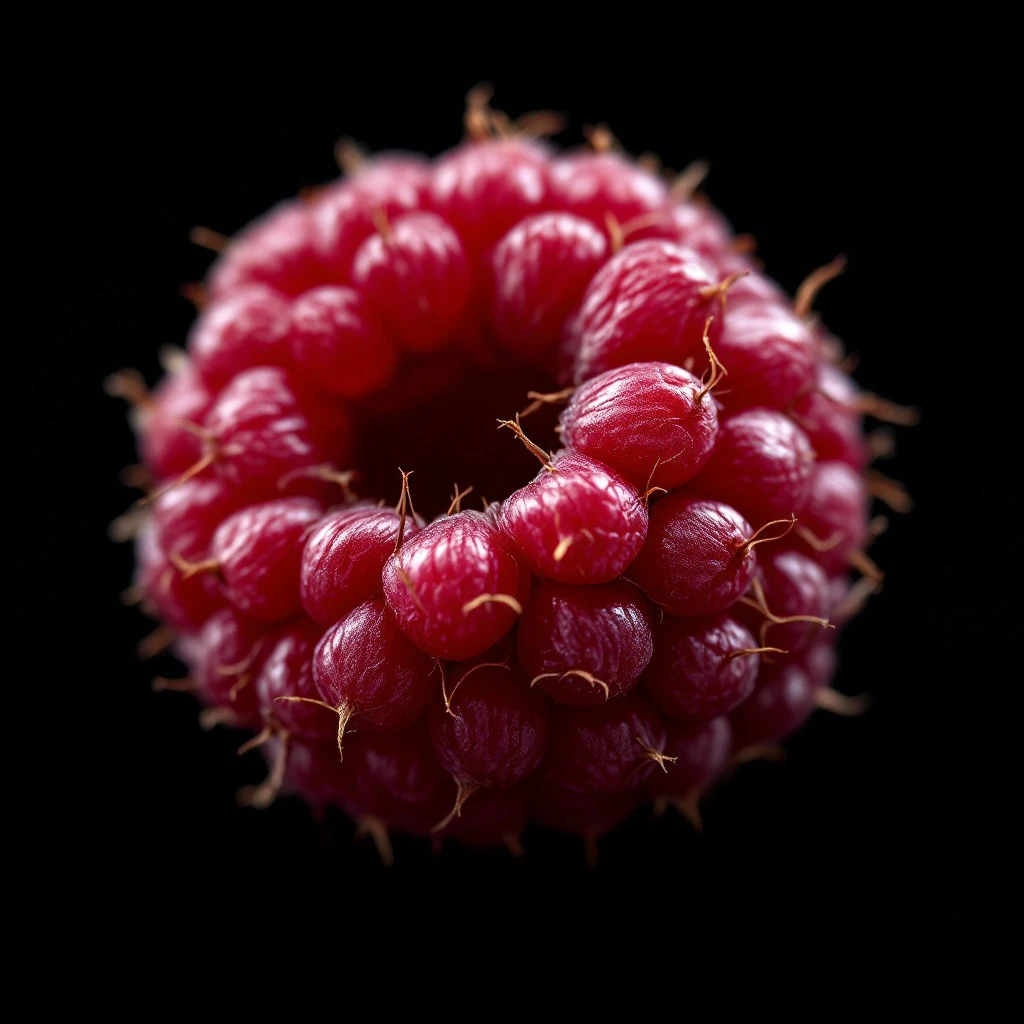
Sun-dehydrated fruit with a jammy, concentrated sweetness
The molecule raspberry ketone, first isolated from raspberries in 1953, gives the fruit its characteristic scent. Synthetic versions now supply most of the global perfume market.


Origin
Greece (botanical origin); globally cultivated
Raspberries have been cultivated and wild-harvested for over two thousand years, appearing in writings from Pliny the Elder around 37 AD, who described them as coming from Mount Ida in Greece (hence the botanical name Rubus idaeus). The Romans ate them and possibly pressed them for cosmetic use, though no direct evidence survives of raspberry in classical perfumery. The fruit remained largely a culinary material until the 19th century, when organic synthesis gave chemists the tools to isolate and recreate its aromatic compounds.
The turning point came in 1953, when a team identified and characterized raspberry ketone as the molecule responsible for the fruit's distinctive warm-fruity scent. Within a decade, synthetic raspberry ketone became a staple of flavored goods and cosmetics. By the 1980s, fragrance houses began incorporating dried-raspberry-style accords into fine perfumes, recognizing that the dehydrated fruit offered a denser, less volatile profile than fresh berry notes.
Today the ingredient bridges gourmand perfumery and traditional fruity floral compositions, particularly in formulations designed to evoke warmth and nostalgia.
Wears it best
Fragrances featuring Dried Raspberry
Brands
Brands known for Dried Raspberry
Good to know
Questions, answered
The essentials on Dried Raspberry in perfumery: how it smells, where it comes from, and how it behaves on skin.
What does dried raspberry smell like in perfume?
Dried raspberry smells tart, jammy, and slightly caramelized, with a warm fruity sweetness that leans more cooked than fresh. It reads gourmand but rests on a faintly woody, seed-like base that keeps it from becoming syrupy. Most formulations pair it with woods or musks to anchor the sugar.
Is raspberry ketone natural or synthetic?
Both versions exist. Raspberry ketone was first isolated from real raspberries in 1953, but natural extraction yields tiny quantities, so over 90% of commercial raspberry ketone is synthesized from petrochemical starting materials. Biotech fermentation now offers a third, bio-based route.
How is the dried raspberry note made?
Dried raspberry accords are built from synthetic raspberry ketone layered with ethyl maltol, gamma-decalactone, and trace amounts of furaneol. This combination simulates the oxidative, slightly jammy quality of real dehydrated fruit. True raspberry absolute is available but rarely used due to cost.
Where does raspberry ketone come from?
Natural raspberry ketone traces to the red raspberry, Rubus idaeus, first botanically documented on Mount Ida in Greece. Wild plants contain less than 0.5 mg of ketone per kilogram of fruit, which makes synthetic production the commercial standard since the 1960s.
Is raspberry safe in fragrance?
Yes. Raspberry ketone is FDA-approved as a food flavoring and is listed as safe for cosmetic use by IFRA (the International Fragrance Association) at standard use levels. It causes no sensitization at typical fragrance concentrations below 0.5% of the formulation.
When was raspberry ketone discovered?
Raspberry ketone was characterized as a pure aromatic compound in 1953 by researchers studying the volatile profile of fresh raspberries. Commercial synthesis expanded rapidly through the 1960s as candy and cosmetic industries adopted it as a flavor and fragrance ingredient.
What fragrances commonly use dried raspberry?
Dried raspberry accords appear across mid-2000s niche perfumery and contemporary mainstream releases, particularly in gourmand and fruity-floral compositions. It frequently appears as a top or mid note alongside rose, praline, patchouli, and vanillin to add a tart-sweet accent.
Can dried raspberry be produced from real fruit?
Rarely, due to economics. It takes roughly 400 kilograms of fresh raspberries to produce one kilogram of natural raspberry absolute through solvent extraction. This scarcity keeps natural raspberry material out of most commercial perfumery, leaving synthetic molecules as the practical source.