
The Story
Why it exists.
The beginning
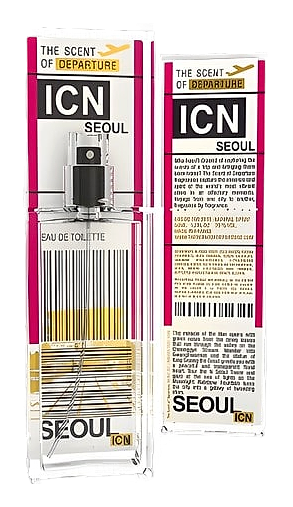
Seoul ICN translates Incheon International Airport into a wearable scent, released in 2012 as part of The Scent of Departure's exploration of airport locations. Each fragrance in the line corresponds to a specific three-letter code, and Seoul ICN carries the designation for Korea's largest hub. Rather than reaching for the obvious cultural shorthand of palaces or street food, the composition turns inward toward the quiet, transitional zone that surrounds modern air travel. The focus settles on the green spaces tucked inside terminal architecture, the kind of planted corridors that punctuate long walkways between gates.
The choice to build Seoul ICN around fig leaf, grass, and violet leaf places the composition firmly in a green register from the start. These three notes carry a humid, almost tropical density, layering lactonic fig sweetness against the sharper chlorophyll sting of cut grass and the cool, cucumber-edged character of violet leaf. The effect is dense and vegetal, weighted toward foliage rather than fruit. Lemon enters with a bright, almost antiseptic snap, its zest sharpened into something closer to citrus peel than juice.
The evolution
The opening delivers a near-violent burst of green that announces itself before you've even lifted your wrist. Crushed fig leaf, torn grass, and a wet violet leaf accord collide into something dense and unapologetically vegetal. There's a rubbery, sappy quality to the fig that grounds the brighter notes, while the violet leaf contributes its cool, metallic cucumber signature. Lemon cuts through the top with sharp, almost industrial brightness, a citrus that reads more like peel than juice. There's nothing soft about this opening. It smells concentrated, almost aggressive, like the concentrated essence of foliage pressed into liquid form. As the fragrance settles, the greens begin to recede and the florals start to surface in earnest. Lilac arrives first, bringing a sweet, slightly powdery character that feels nostalgic rather than sharp.
Cultural impact
The Scent of Departure anchored each fragrance around a specific IATA airport code, a creative conceit that positioned the line somewhere between perfumery and conceptual art. Seoul ICN joined a catalog of airport-themed compositions, each one built around atmosphere rather than cultural shorthand. The approach treated transit infrastructure as a legitimate subject for fragrance, a departure from the city-as-postcard model that dominated niche perfumery at the time. Collectors and fragrance writers noted the line's conceptual consistency, and the airport-code approach influenced how subsequent niche houses approached place-based scent design.