












Heritage
A house, in its own words
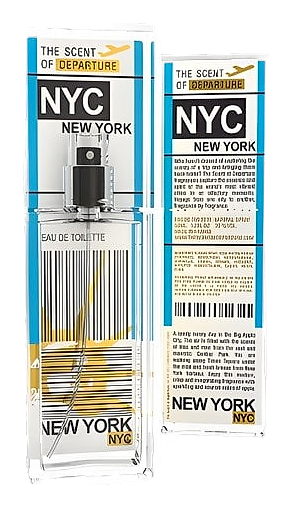
The Scent of Departure emerged from a creative partnership between designer Magali Senequier and fragrance creator Gerald Ghislan. Both founders share an interest in travel and the liminal spaces where different cultures intersect. Airports, with their unique blend of anticipation, exhaustion, and possibility, became their conceptual playground. The brand released its collection between 2011 and 2012, producing approximately 19 fragrances during this active period. Each scent corresponds to a specific international airport, allowing travelers to commemorate routes they have flown or dream of flying. The founding concept revolves around capturing not the tourist attractions of a city but rather the specific atmosphere of its primary aviation hub, that transitional space where visitors first arrive or last linger. The brand's name directly addresses this focus, pointing to departure not as an ending but as a threshold moment charged with potential. The Ghislan and Senequier collaboration brought together design sensibility and fragrance expertise, though neither founder has extensive public documentation of their prior work. The collection's concentrated release window suggests a deliberate, curated approach rather than ongoing product development, placing The Scent of Departure in the category of finite, purposeful fragrance projects. The Scent of Departure operates from a premise that airports constitute their own distinct olfactory universe. Rather than attempting to distill the essence of an entire city into a bottle, the brand narrows its focus to the sensory experience of the departure gate. This approach sidesteps the impossible task of geographic representation and instead captures something more subjective: the mood of transit, the quality of light in a specific terminal, the collective anticipation of a boarding area. Each fragrance functions as a memory trigger for travelers who have passed through the corresponding airport. The airport code naming system serves a practical purpose, instantly communicating geographic reference without requiring elaborate marketing copy. It also creates a collectible framework, encouraging travelers to complete a personal set of routes they have traveled. The philosophy treats departure as a moment worthy of attention and remembrance, transforming what most travelers experience as mundane transit time into something worth preserving through scent. This reframing of the ordinary represents the brand's core creative gesture.