The Story
Why it exists.
The beginning
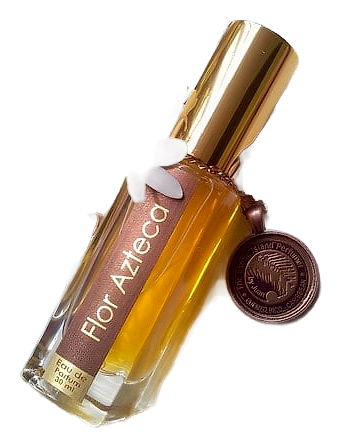
Flor Azteca was born in 2012 from a single question: what does tuberose actually smell like in its native soil? Perfumer Juan Perez built the composition around fresh Mexican tuberose, the raw, almost green narcotic flower that perfumery usually flattens into something safe. The name, Azteca, evokes the flower's deep cultural geography. This isn't a white floral designed to please crowds. It's a botanical portrait of a plant in its original habitat, surrounded by cacao, copal, and the kind of heat that makes tropical flowers smell less like decoration and more like weather. The composition leans into notes that bruise the nose: spicy ginger, black pepper, and a chocolate bitterness that grounds the floral before it can float away.
The unusual pairing of chocolatl, the ancient cacao-laced drink, with massoia bark in the opening sets the tone. The chocolatl note gives a dark, unsweetened richness while the massoia adds a milky, woody depth that tempers the chocolate's bite. The fresh Mexican tuberose enters with green density, neither fully creamy nor fully camphoraceous, threading somewhere between both poles. Rich, spiced, slightly bitter, with a warmth that radiates from the skin outward.
The evolution
The opening minutes are almost food. Cacao and massoia bark arrive first, a dark, lactonic sweetness that reads like bitter chocolate dusted on warm wood. The fresh Mexican tuberose follows within minutes, but it doesn't bloom the way you expect. Instead it pushes green and dense, riding on ginger and black pepper that make the whole opening feel like stepping into a greenhouse at noon. The floral heart widens as datura and magnolia join the tuberose, softening its narcotic edge into something fuller and almost creamy. The interplay between the creamy magnolia and the sharper datura creates a layered fullness that feels alive on the skin. As the hours pass, copal negro and smoky woods settle underneath the Mexican vanilla and benzoin, and the composition shifts from floral perfume into something closer to resin and ember.
Cultural impact
Flor Azteca earns its place among tropical florals that honor their source materials. The fragrance draws on cacao, copal, tuberose, and other elements tied to specific geographies and traditions, weaving them into a single composition that feels both ancient and contemporary. The use of chocolatl, the ancient cacao-laced drink, anchors the scent in pre-Columbian heritage while the massoia bark and smoky woods bring a broader tropical resonance. The result is a perfume that reads as a conversation between cultures, materials, and climates, built from ingredients that carry centuries of meaning in their native contexts.