The Story
Why it exists.
The beginning
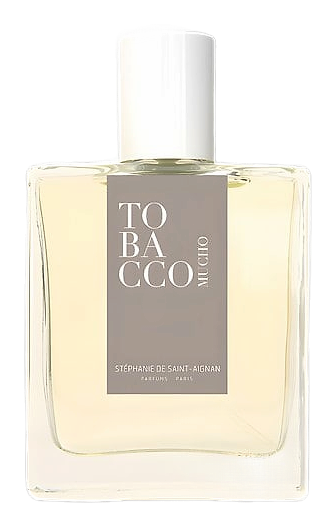
Tobacco Mucho arrived in 2006 as a composition by Stéphanie de Saint-Aignan, whose eponymous collection would follow shortly after. The fragrance is meant to evoke the smell of Havana cigars, and the composition reads as a concentrated, smoky moment rather than a dressed-up tobacco blended into something crowd-pleasing. Her other listed compositions, Le Pot Aux Roses and Voleur de Ciels, share that same instinct: build around a single sensory image and let it stand on its own, no apology, no softening. Tobacco Mucho reads as the most austere of the three, a short list of materials treated with discipline, each note given exactly the room it needs before it tips over.
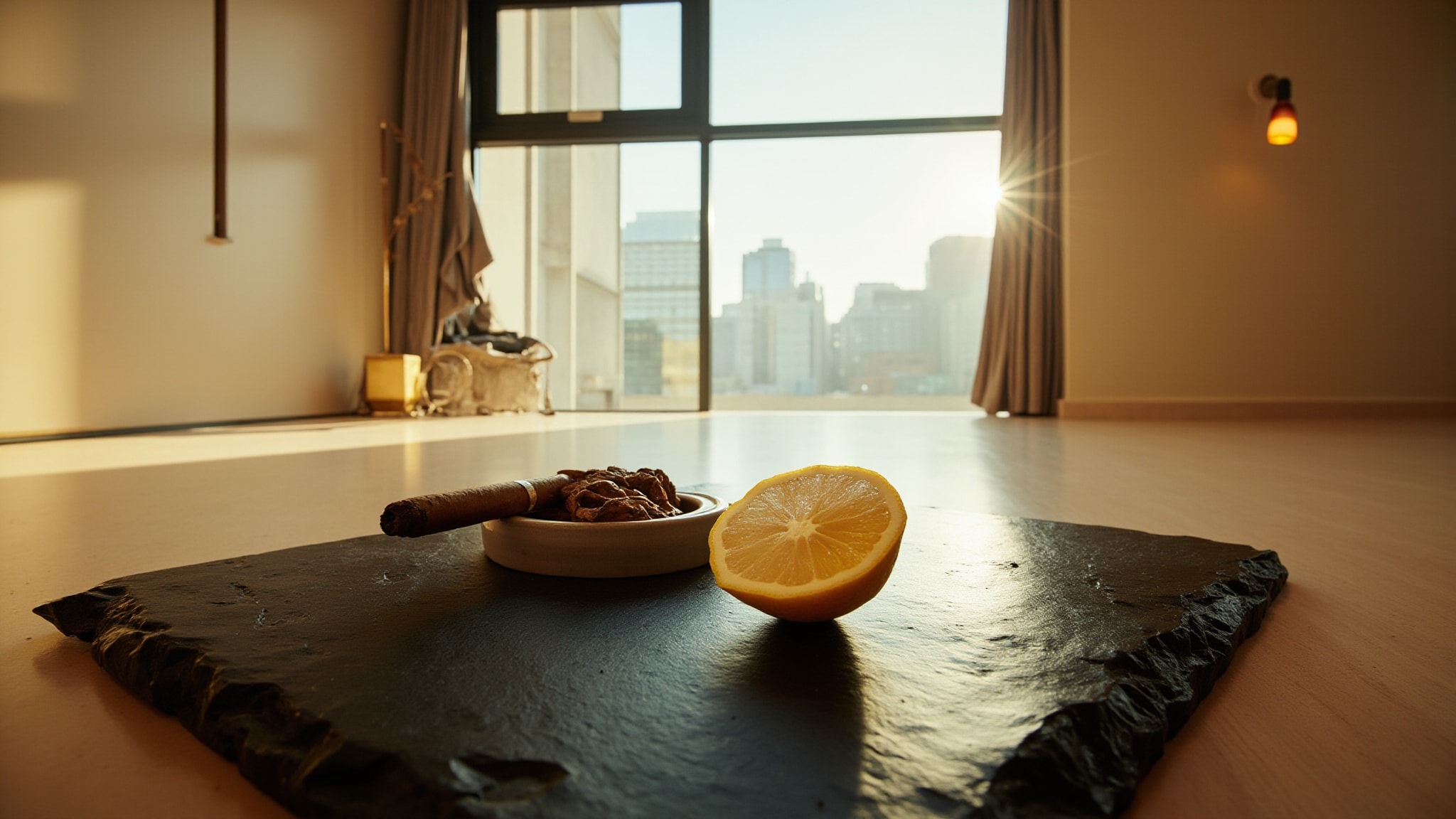
Most tobacco fragrances surround themselves with safety nets, vanilla, amber, honey, tonka, anything to make the leaf feel edible and warm. Tobacco Mucho stripped the scaffolding. Lemon cuts the top, tobacco commands the heart, and woody notes carry the base. There's almost nothing in between, no gourmand cushion, no floral distraction. The result is a composition that asks the raw material to do the heavy lifting, and the precision is visible in how the doses are calibrated: enough lemon to brighten, just enough wood to anchor, tobacco allowed to ferment and darken on its own terms.
The evolution
The first five minutes belong entirely to lemon, not the bright zest of a garnish but the cold squeeze of citrus pulp, almost frosted. Then it steps back and the tobacco arrives, dense, slightly fermented, with a green-spicy edge that reads like cured leaf still in the drying shed. The woody base never fully announces itself; it operates more as the floor underneath the tobacco, holding it steady rather than competing. By the second hour the citrus has thinned to a memory, the smoke has mellowed into something warmer and quieter, closer to woodsmoke than cigar. On a sweater the next morning, what's left is a faint sweet-dusty trace, the ghost of tobacco having sat too long in an ashtray.
Cultural impact
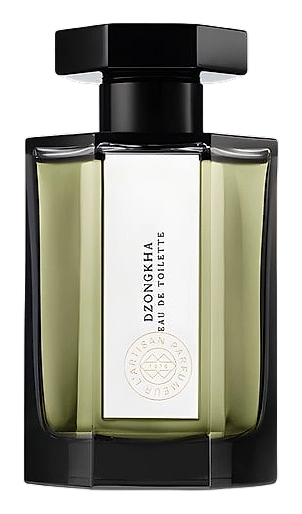
Tobacco Mucho stands as one of the more singular tobacco compositions in the indie perfume catalog, which makes it easy to overlook when scanning the wider output of the perfumer's work. Encre Noire by Lalique and Dzongkha by L'Artisan Parfumeur are listed alongside it on recommendation engines, two references that hint at where it sits: smoky, woody, and uninterested in being immediately likeable. Production appears to have been discontinued, which makes remaining bottles something to seek out rather than browse casually.