
The Story
Why it exists.
The beginning
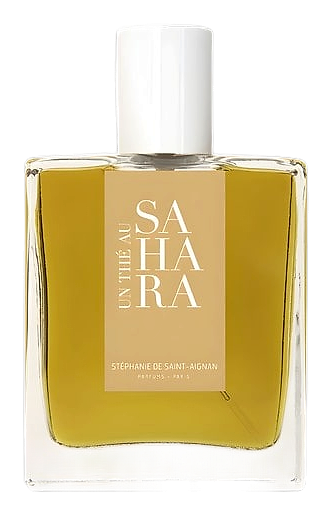
Stephanie de Saint-Aignan approaches fragrance as aromatic literature, each composition encoding a sensory memory or imagined landscape. Un The Au Sahara began not as a love letter to mint tea, but as an attempt to capture the Saharan desert itself through raw materials. Tea, mint, amber, patchouli: not recreating the drink, but translating the logic of the place into liquid form. The contradiction of extreme daytime heat meeting the cool relief of mint tea. Dry air against humid skin. Amber resin as memory of something ancient and warm. The name references the ritual of mint tea in Saharan hospitality, but the fragrance refuses to smell like a cup, it smells like the reason someone would drink one.
The note pyramid reveals a composition built on continuity rather than contrast. The same materials appear in top and heart, amber, tea, mint, woody notes, patchouli, spices, but their proportions shift, creating evolution through deepening rather than dramatic transition. Mint does the most work in the opening: bright, slightly sweet, with that clean quality that cuts through dry air. Amber appears here too, but in its fresher, more resinous form. The spices arrive quietly, warm rather than hot. What makes this structure distinctive is how the mint doesn't disappear, it retreats, becoming a background freshness beneath the growing amber and spice.
The evolution
The opening announces mint and tea, bright, slightly sweet, with that clean quality that cuts through dry air. Amber and spices layer in warm and resinous. Around 30 minutes, the mint softens as patchouli and woody notes come forward. The composition shifts from bright green to something darker, earthier. By the second hour, the mint has largely retreated. What remains is amber and spice, warm, resinous, with the patchouli becoming more pronounced. This is the heart of the fragrance: a warm, slightly smoky, deeply Saharan phase that invites the comparison to desert landscapes. The third hour brings the woody drydown. Patchouli and wood take over, with a dusty quality that lingers like incense smoke in the distance. The amber persists as a warm undertone, sweet and resinous. The drydown is where the fragrance earns its name, not through the tea note, but through the mineral warmth that remains. By hours six to eight, patchouli and amber dominate. The tea is long gone. The mint is a memory.
Cultural impact
Un The Au Sahara emerged from the early niche fragrance wave of the mid-2000s, when adventurous consumers began seeking alternatives to commercial releases. The 2006 launch, before the official 2007 collection, placed it alongside releases like Le Pot Aux Roses and Voleur de Ciels as an early statement of intent. The mint-tea-amber-patchouli combination positioned it as something literary and sensory rather than trendy. The fragrance presents as a quiet rather than commanding presence, suited to someone who wants fragrance as personal memoir rather than commercial statement. Its discontinued status has made it harder to find, which has only deepened its appeal among those who seek out niche compositions on their own terms.