
The Story
Why it exists.
The beginning
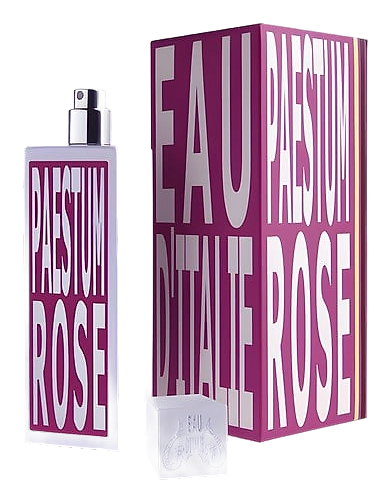
Paestum Rose takes its name from an ancient city in Southern Calabria, once famous for roses that bloomed twice a year, an anomaly that made them legendary across the ancient Mediterranean. The city was a Greek colony, and its roses were prized not for softness but for intensity, their character shaped by the particular qualities of the region. In 2006, perfumer Bertrand Duchaufour translated that history into a fragrance for Eau d'Italie. What emerged was a rose composition that leaned into resin and smoke, presenting an unexpected edge that felt more archaeological than decorative, with a dusty quality that suggested something discovered rather than something offered.
The top notes of pink and black pepper arrive first, warm and spice-forward, as if the roses were crushed alongside coriander seed and davana. The Turkish rose in the heart is not delicate, it is dense, almost jam-like in its richness, underscored by frankincense that adds a smoky, sacred quality. Osmanthus brings a fruity depth that most rose compositions skip entirely, an apricot-like nuance that gives the heart added dimension. The result is a fragrance that smells like it has weight, like the rose had to push through something to reach the air.
The evolution
The opening is all spice and warmth, pink pepper and black pepper arriving together, with coriander seed lending a faint herbal lift beneath. Within twenty minutes, the rose pushes through. Not a gentle bloom. Turkish rose, thick with resin, frankincense smoke already threading through it. The transition from spice to smoke feels deliberate, a shift in register that reframes the initial warmth. Two to three hours in, the smoke settles. Myrrh and opoponax take over, sweet and balsamic, resinous in a way that feels ancient. Papyrus and wenge wood form the base, a drydown that carries the fragrance into evening warmth, close to the skin and long-lasting.
Cultural impact
Paestum Rose presents a rose that refuses to be pretty. The 2006 composition drew on ancient materials and ancient history, creating a rose with weight and smoke that felt purposeful rather than decorative. Its discontinuation elevated its standing among fragrance collectors who had sought it out, those who appreciate a rose that pushes beyond conventional sweetness into something with real substance and complexity.