
The Story
Why it exists.
The beginning
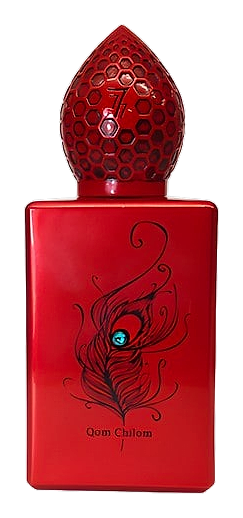
Qom Chilom takes its name from the Persian city of Qom, a reference that carries weight for those familiar with its significance. The fragrance builds from a simple premise: bright on arrival, confrontational at its heart, intimate in its resolution. Cherry and raspberry open with an almost edible sweetness, their fruit-forward character immediately apparent and inviting. Then the camphor arrives and the composition shifts, not a gentle transition but a deliberate displacement, the sweet replaced by something sharper, darker, stranger. Oud and teak fill the space the fruit left behind, their woody presence anchoring the fragrance as it moves through its middle phase.
The combination is deliberately uncomfortable. Camphor and oud don't traditionally share space, one is medicinal, the other precious. But Lucas built Qom Chilom around that friction. The camphor isn't a fleeting top note; it's the structural element of the heart, anchoring the composition and keeping the sweetness from becoming decorative. Heliotrope and iris add a powdery softness that reads as feminine against the leather and wood, which is probably why the fragrance performs as genuinely unisex rather than just claiming the label.
The evolution
The opening announces itself immediately, sour cherry, raspberry, bright and almost candied. Within minutes the camphor cuts in, medicinal and sharp, pushing the sweetness aside with deliberate force. The heart belongs to oud and teak now, camphor holding everything together like a resinous wire. You either love this phase or you do not, there is no middle ground. Then the florals arrive, heliotrope and iris softening the edges just enough to make the leather and patchouli bearable. By the third hour the composition has settled into its final form: warm, intimate, close to the skin. Vanilla and musk carry the drydown, with leather still present but no longer dominant. The oud lingers longest, a ghost of what the fragrance was at its most complex.
Cultural impact
Qom Chilom attracted attention for its confrontational character, a fragrance that refuses to make itself easy. The camphor-forward composition creates a distinct olfactory experience, one that divides opinion among those who encounter it. Some describe the camphor note as meditative, a quality that rewards patience and attentive wearing. Others find its medicinal sharpness challenging, an initial barrier that can limit appreciation to those with specific tastes. The fragrance prioritizes character over consensus, standing apart from more approachable compositions that aim for broad appeal.