
The Story
Why it exists.
The beginning
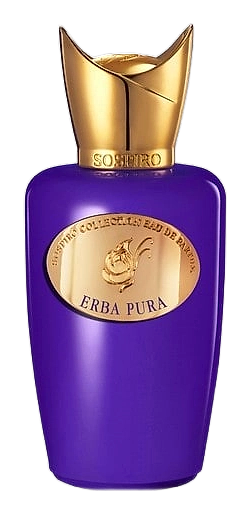
Erba Pura arrived in 2013 from Christian Provenzano, an Italian perfumer who understands that fruit and darkness aren't opposites. The name suggests pure herbs, clean and simple. The fragrance suggests something else entirely, a composition that refuses to choose between radiant sweetness and deep, resinous warmth. Provenzano built Erba Pura as a contradiction: stone fruits bright enough to catch light, a base that pulls toward shadow. The idea was to make abundance feel intentional rather than overwhelming, sweetness that knows it has something to prove.
The heart of Erba Pura is three stone fruits, melon, peach, apple, layered with saffron for a subtle metallic warmth. Most fruity fragrances stop there. Erba Pura keeps going. The oud in the base isn't hidden or softened; it's present, bringing a resinous woodiness that grounds the sweetness before it becomes airborne. Leathery notes add structure, giving the fruit somewhere to land rather than dissipate. The result is a fragrance that reads as lush without tipping into cloying, approachable enough to wear daily, dramatic enough to leave a trace.
The evolution
The opening is all citrus and stone fruit, orange, bergamot, and lemon cutting through a wave of melon and peach. It reads sweet, maybe even naive. Then the oud arrives. Not gradually. It pushes through the fruit like something that's been waiting, turning the sweetness resinous and strange. The leather notes add texture, making the heart feel less like a dessert and more like a moment of reckoning. By the drydown, the vanilla and amber have settled into something warm and close, intimate, not projecting. On fabric, it lingers. The next morning, there's a ghost of it still.
Cultural impact
Erba Pura occupies a specific position in the niche fragrance landscape: fruity enough to attract newcomers, oud enough to satisfy experienced collectors. The composition commands a loyal following among enthusiasts, with a presence that places it among the more powerful releases in its category. The 2013 launch predates the current wave of oud-forward fragrances, giving it a certain pioneer status among those who discovered it early.