
The Story
Why it exists.
The beginning
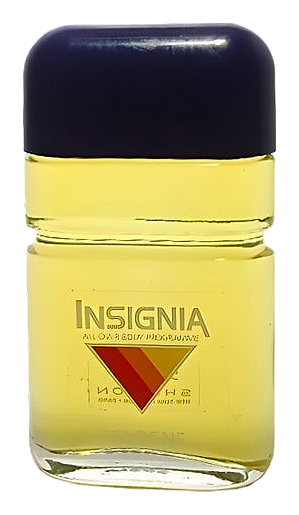
Insignia arrived in 1986 as Shulton Company's statement in the premium men's space. Old Spice was everywhere at that point, a fixture on pharmacy shelves and in barbershops across America. But Insignia was something else entirely. The name itself carries weight: an insignia marks something official, earned, unmistakable. It suggests something with presence, with a sense of purpose built into its very label. The fragrance carries that same quality, a bold declaration through scent rather than words, positioned to stand apart from the mass-market classics that had made the house familiar.
The note pyramid is where Insignia earns its distinction. Bergamot and lemon open clean, but the basil and rosemary aren't decorative, they're the herbaceous backbone that separates this from a simple citrus cologne. The heart adds pine and coriander, creating a forest quality that feels grounded rather than airy. The base, oakmoss, patchouli, musk, cedar, tonka bean, is where the fougere structure becomes undeniable. This is aromatic masculinity in its most traditional form: herbs, woods, moss. It's the exact pyramid that defined men's fragrance for decades, executed without apology.
The evolution
The opening is bright and immediate, bergamot, lemon, a flash of green from the basil and rosemary. Clean, confident, recognizable. Within twenty minutes the herbs settle and the pine begins to assert itself, joined by coriander and petitgrain. The florals (jasmine) are subtle, more texture than statement. The drydown is where the fougere structure reveals itself fully. Oakmoss takes the lead, followed by cedar and patchouli. The musk and tonka bean add a quiet warmth underneath. The whole arc runs moderate to long, with the base notes lingering close to the skin in the final hours. There's a richness to how it develops that rewards patience, the herbs giving way to something deeper and more resinous as the hours pass.
Cultural impact
Insignia occupies an interesting position, a 1986 aromatic fougere from a house known for mass-market classics. The scent's traditional structure (herbs, woods, moss) is built on classic fougere conventions that have become rare in modern perfumery. The combination of oakmoss, lavender, and coumarin creates that signature aromatic character that defined men's fragrances for generations before ingredient restrictions changed what perfumers could do. It's a time capsule in bottle form, carrying the full weight of what a fougere once was.