
The Story
Why it exists.
The beginning
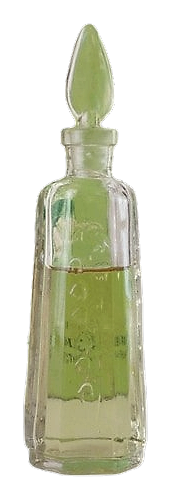
Muguet Argente arrived in 1952, crafted by Bella Goutzeit for the Northern Lights house. The name, silvered lily-of-the-valley, speaks to the fragrance's central tension: a flower associated with soft spring tenderness, translated through the cool, precise register of mid-century Soviet perfumery. Goutzeit understood that Russian florals carry something different than their Western counterparts. They arrive later, persist harder, mean it more. The brief appears to have been straightforward: capture lily-of-the-valley at its most dignified, wrapped in aldehydic shimmer, grounded in the kind of green accord that Russian perfumers had spent decades perfecting. The result is a fragrance that doesn't ask for attention. It assumes it.
What makes the structure unusual is the repetition: lily-of-the-valley appears in both top and heart, a doubling that could read as redundancy in lesser hands. Here it functions as a sustained note, the flower arriving bright, then returning richer as the aldehydes recede, joined by jasmine and violet. The aldehydes themselves are the key. They're the elevator music of classic perfumery, lending sparkle and a certain retro-modern elegance, but Northern Lights uses them colder, more mineral than most Western interpretations. The lilac adds a powdery, slightly bitter edge that prevents the whole thing from sliding into sweetness.
The evolution
The opening hits bright and aldehydic, that characteristic fizzy lift, like seltzer against the tongue. Lily-of-the-valley arrives within seconds, green and immediate, joined by ylang-ylang's tropical sweetness and the powdery cool of lilac. This phase lasts perhaps twenty minutes before the aldehydes thin and the heart opens. Jasmine and violet emerge, the rose adding a brief, elegant sweetness that doesn't overstay. Then the handoff: lily-of-the-valley returns, but deeper now, its green quality softening into something closer to damp stems. The base arrives slowly, musk first, warm and clean, then amber lending a faint honeyed glow, vetiver grounding everything with its dry, rooty finish. By hour four, you're left with clean musk and the ghost of green. On fabric, the lily-of-the-valley lingers into the next day.
Cultural impact
Lily of the valley holds a special place in Russian and Eastern European cultural traditions, where this delicate flower has long symbolized the arrival of spring, renewal, and happiness. In France, the custom of giving lily of the valley on May 1st became widespread, a tradition that blends the spring flower with seasonal celebration. The flower's associations with springtime and renewal resonate deeply in these regions, where it evokes memories of seasonal walks and simple botanical beauty.