The Story
Why it exists.
The beginning
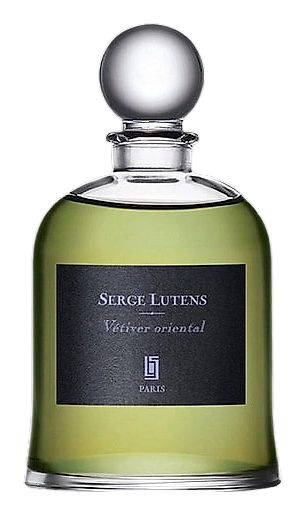
Serge Lutens has never hidden his feelings about conventional men's fragrance, the harsh citrus, the aggressive freshness. In 2004, working with perfumer Christopher Sheldrake, he set out to find something different. His target was vetiver, specifically the root itself, which he described as 'petrified witch's hair.' The idea was to extract warmth from something typically associated with sharpness, to find the silk inside the earth. What emerged was Vetiver Oriental, a name that announces its contradiction immediately.
The structural decision here is unusual: take a note defined by its freshness and anchor it in oriental warmth. Vetiver typically provides the cool counterpoint in a composition. Here, it becomes the anchor itself, surrounded by dark chocolate, guaiac wood, and labdanum, while powdery iris and amber soften what could have been aggressive. The result is a fragrance where the expected trajectory reverses entirely. The opening smells resolved rather than bright, the drydown lingers without sharpening. This is vetiver for someone who doesn't want to smell like they're wearing vetiver.
The evolution
The opening announces itself without announcing anything. A brief herbal green moment, the cut stem, the plant sap, dissolves almost immediately into powder. The iris and the branches arrive together, already settled, already warm. No sharp vetiver crackle, no citrus interruption. The heart is where this fragrance earns its name: vetiver root married to dark chocolate, guaiac wood adding a smoky dimension that reads almost savory. Not sweet chocolate, more like the memory of cocoa in a wooden box. As the hours pass, the resinous base takes over: labdanum, sandalwood, amber, and musk form a warm, powdery foundation that stays close to the skin. On fabric, it lingers into the next day, soft, woody, resolved.
Cultural impact
Vetiver Oriental occupies a specific corner of the niche world: the vetiver lover who finds standard interpretations too sharp or predictable. Its moderate sillage and powdery-woody character make it a quiet proposition in an era of projection-heavy releases. The 2004 launch date places it early in the Lutens catalogue, before the house's more confrontational offerings like La Fille de Berlin. It's the fragrance for someone who wants Lutens' artistic credibility without the challenge.