The Story
Why it exists.
The beginning
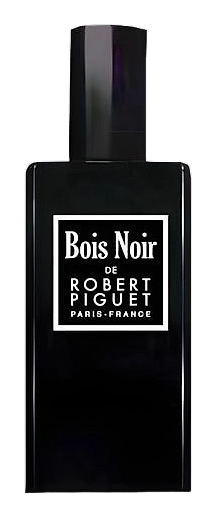
Bois Noir arrived in 2012, designed by perfumer Aurélien Guichard. The name means black wood, and that is exactly what it delivers. Not the polished mahogany of old libraries. The other kind. The kind that comes from a place where timber has been burning long enough to leave its mark in the air. Robert Piguet had built a house on boldness: Bandit's leather, Fracas's tuberose. This was the dark wood chapter. Guaiac and cedar as the opening act, sandalwood and patchouli as the heart. The brief was avant-garde, but the execution stayed wearable, which is the Robert Piguet way.
The structure is almost unusually vertical. Three woods stacked on top of each other, each doing something different. Guaiac brings smoke and a faint medicinal edge. Cedar keeps it soft and warm. Sandalwood adds creaminess. Then patchouli earths it all. But the true signature is what happens at the base: labdanum, the sticky resin from cistus rockrose, gives this something animalic and warm that most wood fragrances skip entirely. The musk in the drydown makes it intimate rather than projecting. That is the trick here, woods that could be aggressive, made close.
The evolution
The opening hits with guaiac wood and cedar. Smoke first. A faint tar note, that slightly medicinal edge that guaiac is known for. Cedar follows, softer, pencil shavings, warm wood. The combination does not fully resolve into sweetness. There is an edge here that keeps it interesting. Around 15 to 30 minutes in, sandalwood arrives. Creamier. Warmer. Patchouli layers underneath, earthy and deep. The guaiac does not disappear, it retreats, but it stays. This is not a linear fragrance. The heart moves from warm woods into something earthier. Then, over the next several hours, labdanum enters the picture. Sticky. Slightly animalic. Blended with musks and amber, it becomes something warm and skin-close. The drydown is Balsamic with a capital B. Warm. Intimate. The longevity is 8 to 10 hours on most skin. A full workday. It does not fill a room. It stays close, present on the wearer, quieter to everyone else.
Cultural impact
Bois Noir arrived in 2012 during a surge of niche woody fragrances, but it carved its own territory by refusing the oud dominance of that era. Where many releases leaned on agarwood as a status marker, Aurélien Guichard instead turned to guaiac wood, an ingredient with roots in South American perfumery that carries smoke and medicinal depth without the polarizing fermentation of oud. The 2012 launch positioned Robert Piguet as a house willing to pursue dark wood aesthetics through less obvious materials. Within the context of the house's history, from Bandit's 1944 leather-chic to Oud's 2011 statement, Bois Noir represents a third way, woody without aggression, smoky without funk.