The Story
Why it exists.
The beginning
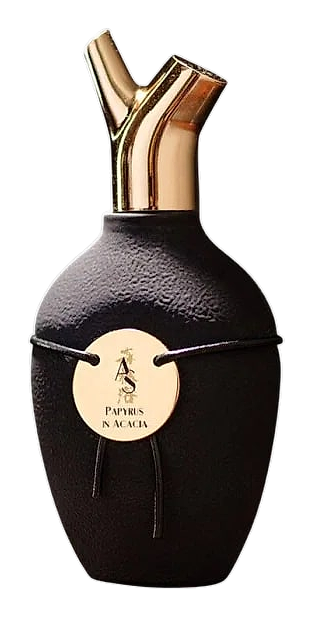
Papyrus in Acacia arrived in 2021, the work of perfumer Jean-Marc Chaillan. Papyrus, the reed paper of the Nile, lends the composition its name and its earthy pulse, while acacia brings the dry, slightly resinous woodiness that runs beneath every other note like bedrock. The composition leans into cypriol, Egyptian geranium absolute, and Egyptian cassie absolute, materials that carry real weight in the bottle and on the skin. There is a dusty warmth to the way these absolutes read, something that feels closer to pressed botanicals than to anything assembled in a lab. Chaillan builds the fragrance with a deliberate hand, letting the smoke and the florals speak in alternation rather than shouting over one another.
What separates this from a standard oriental is the source materials. Egyptian cassie absolute and Egyptian geranium absolute are not common building blocks in commercial perfumery, and they require a perfumer willing to work with their particular behaviors. Chaillan works with carrot for that earthy-sweet whisper, cypriol for the burnt-edge smoke, and orris root to anchor the powdery florals into something resembling skin. Star anise sharpens the spice without tipping into candy.
The evolution
The opening hits with carrot and star anise before you even register the smoke, a green-tinted sharpness that announces itself quickly and then pulls back. Cypriol takes the wheel early, dragging the whole composition toward something smoldering and papery, like the smell of a room where ink has dried in the air for hours. The florals arrive late but deliberately: Egyptian cassie absolute blooms through the smoke, adding a honeyed, almost hay-like sweetness that softens the leather without killing it. Egyptian geranium absolute shows up as a cool counterweight, a green-leaf brightness that keeps the whole thing from collapsing into pure resin. Heart notes of orris root powder the edges, making everything feel slightly out of focus, the way memory softens after a long day.
Cultural impact
Papyrus in Acacia draws on Egyptian-sourced absolutes, cassie and geranium, materials that anchor the composition in a specific botanical lineage rather than a generic oriental template. Its use of cypriol and carrot seed places it alongside other niche compositions that lean on smoke and earth rather than sweetness and projection. The result is a fragrance that reads as material-driven, closer to the plant than to the polished bottle, and it rewards the wearer who treats it as something to be revisited rather than worn loudly.