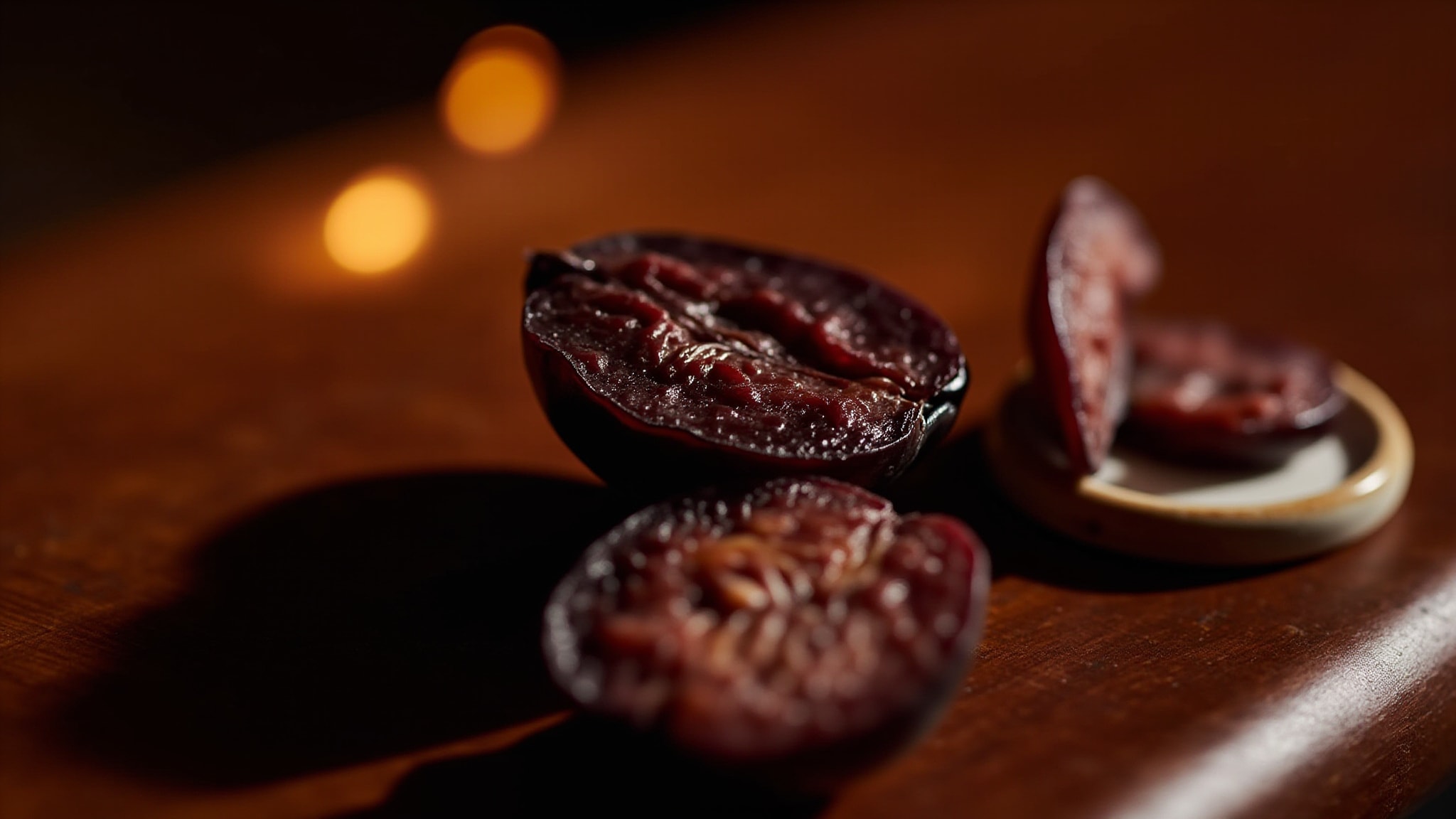
The Story
Why it exists.
The beginning
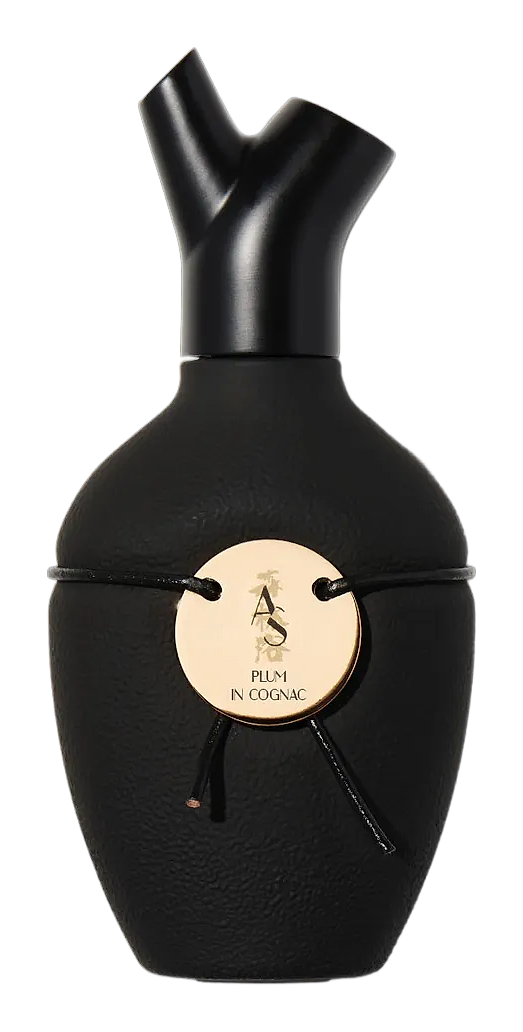
Plum in Cognac was born from a question: what if the base carried the story? Scents of Wood had already proven that aged cane alcohol could do more than dissolve, it could contribute. For Pascal Gaurin, the challenge was to build a fragrance that tasted like its name. Plum, rum, a spirit barrel's warmth. The result is almost literal: a Gourmand that smells like someone opened a bottle, not a bottle of fragrance.
The plum used here isn't a generic stone fruit accord, it's a plum absolute with a dark, slightly fermented quality that reads almost like brandy itself. The rum absolute amplifies this: sticky, sweet, with that brown-sugar warmth that lingers. Cinnamon isn't just a spice note here, it lifts the whole composition, giving the plum something to lean against so it doesn't collapse into something cloying. The balsam and vetiver at the base prevent this from being just a dessert scent; they ground it, keep it wearable rather than overwhelming.
The evolution
Plum in Cognac opens with the plum at its most assertive, dark, sweet, almost syrupy. The rum arrives within minutes, not as a sharp alcohol note but as a warm undercurrent beneath the fruit. The cinnamon shows up early too, threading through the plum so the sweetness never feels flat. Within the first hour, the heart develops: the plum becomes less fresh, more concentrated, almost cooked. The osmanthus adds a subtle floral edge that keeps it from becoming too heavy. The base is where this fragrance earns its reputation, vanilla and Peru balsam create a warm, resinous drydown that stays close to the skin for hours. The Haitian vetiver prevents it from going fully sweet, adds a dry, herbal quality that keeps the fragrance grounded. On fabric, expect the cinnamon and plum to linger longest. On skin, the vanilla-balsam base takes over after hour three and stays through hour eight.
Cultural impact
Plum in Cognac won the 2021 Perfume Extraordinaire award from The Fragrance Foundation, a significant recognition for a house only two years old at the time. The win placed Scents of Wood in a lineage of award winners that includes houses with much longer histories, suggesting the Gourmand category still has room for compositions that push the genre forward rather than simply repeating it.