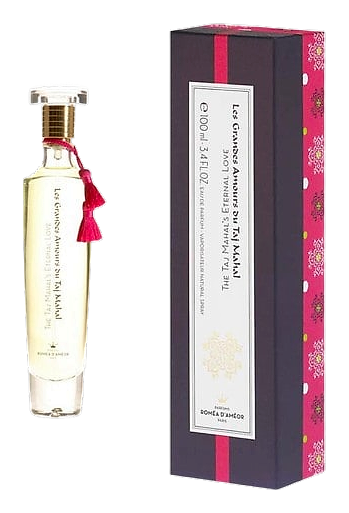

The Story
Why it exists.
The beginning
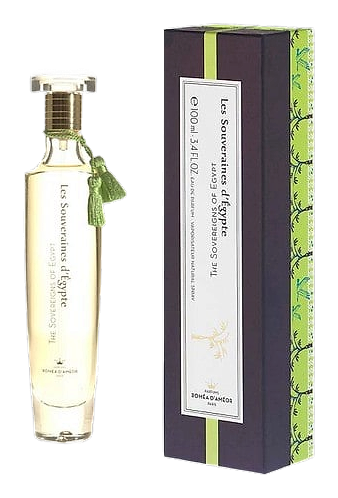
Pierre Bourdon built this fragrance around a love story written in ivory stone. The Taj Mahal was not a palace or a political statement. It was a grief gift, a monument to Mumtaz Mahal, commissioned by her husband Shah Jahan after her death in 1631. Seventeen years of construction. Twenty thousand artisans. A material that changes color with the light. The name of this fragrance is not decorative. It is the entire subject. Bourdon approached the brief the way an architect approaches a site: with respect for the load-bearing elements. The blue lotus, a motif that appears throughout Mughal architecture and manuscript painting, anchors the heart. Everything else supports or recedes. The opening is the approach march: bright, generous, a crowd of notes that opens before you like a garden gate. Then the gate closes behind you. What remains is the stillness inside.
The note structure is unusually disciplined for a fruity-floral. Seven notes open the composition, citrus, melon, blackcurrant, aquatic, green notes, lily of the valley, and yet the effect reads as singular rather than crowded. That restraint is the Bourdon signature. He builds density without heaviness, the way a great building can contain multitudes and still read as simple from a distance. The blue lotus deserves specific attention. In Mughal decorative arts, the lotus functions as both spiritual symbol and architectural detail, a marker of purity placed at structural thresholds. In this composition, it occupies the heart, the structural center, and does not yield to the sweeter notes around it.
The evolution
The opening arrives in layers you can almost separate: bergamot first, crisp and immediate, then the melon swelling underneath, blackcurrant lending tartness to the sweetness. The aquatic notes arrive not as a wall but as a temperature, cool, like the moment shade replaces sun on your skin. It lasts clean for forty-five minutes before the florals start asserting themselves. The hand-off from top to heart is where Bourdon's skill shows. The citrus fades without disappearing. Melon and blackcurrant recede into the background but don't vanish, they become the sweetness that supports the lotus. The blue lotus itself arrives gradually, almost shy, then holds its ground for two to three hours. Rose and jasmine don't compete with it. They harmonize. The drydown is skin-close and powdery. Musk, vanilla, and iris form a soft fabric impression against warm skin. Peach and raspberry surface briefly as the florals fade, then settle into the base. Vetiver adds a mineral undertone that grounds everything, stopping the powder from floating away.
Cultural impact
The lotus has been a symbol of purity and spiritual awakening across Hindu, Buddhist, and Egyptian traditions for millennia, making its inclusion here more than decorative. The Taj Mahal itself was built as a monument to eternal love, and Romea d'Ameor has clearly built this fragrance around that romantic heritage. By centering blue lotus, a flower with deep cultural resonance in South Asian traditions, the brand invites wearers into a fragrance experience steeped in meaning rather than mere pleasantness. In a market flooded with straightforward aquatics, the floral-aquatic fusion here carves out a distinct niche that speaks to buyers looking for something with a story behind it.