The Story
Why it exists.
The beginning
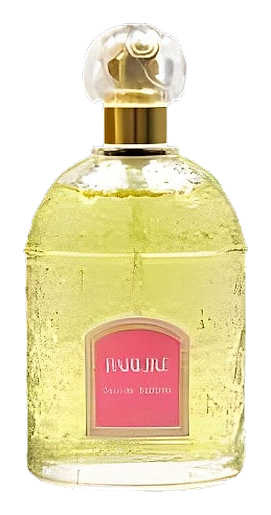
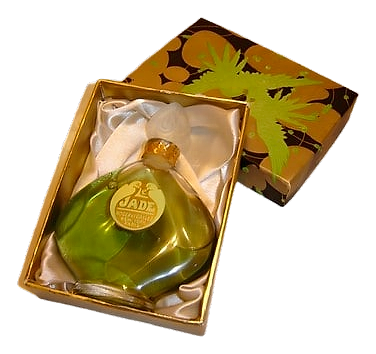
Le Jade launched in 1923, marketed from the start as "The Precious Perfume." Roger & Gallet, the Parisian house, offered Le Jade as their step into something richer: an oriental composition that wore the house's signature citrus spine but added a dense, resinous undertone. The bottle was designed by René Lalique, a clear signal of the fragrance's positioning. The name itself, jade, was the pitch. Cool stone. Green depth. A jewel you keep in a drawer, not on a shelf. The opening is brisk and luminous, lime and bergamot cutting sharp through the air, almost bracing in their clarity. That citrus burst doesn't vanish quickly, either. It threads through the first half hour, softening gradually as the woods and resins rise to take over.
What makes Le Jade worth a second look is the way it stacks its contrasts. Lime and bergamot do the bright, almost bracing work on top, a citrus cut that snaps awake in the first minutes. Then the base rolls in early: sandalwood, vetiver, patchouli, and tonka bean bring an earthy woodiness that anchors the composition in something dense and grounded. Civet adds the slightly animalic edge, the musk the powdery softness.
The evolution
The first ten minutes are a sharp, almost cologne-like burst of lime and bergamot, bright enough to read as a classic French eau. Then the heart settles, and the composition stops being polite. The sandalwood shows up early, creamy and dense, followed by patchouli and vetiver that ground the whole thing in something earthy. Civet adds a slightly dirty musk, the part that makes this a 1923 perfume and not a modern composition. By the two-hour mark, the drydown is where Le Jade lives: tonka, vanilla, ambergris, and that civet warmth all blending into a soft, powdery, skin-adjacent base that stays close to the body. It doesn't project wide, but it doesn't fade either. The citrus top notes gradually yield to a creamy sandalwood-vanilla heart, and the animalic civet weaves through every stage like a low hum.
Cultural impact
Le Jade sits in a narrow category of early 20th-century orientals that collectors and vintage-hunters prize precisely because they're hard to find. Its Lalique-designed bottle, its 'Precious Perfume' positioning, and its place in the Roger & Gallet catalogue give it a distinct identity in the era's fragrance landscape. The composition of lime and bergamot over sandalwood, vetiver, patchouli, and tonka places it among the rich, animalic orientals that defined that period's approach to perfumery.