The Story
Why it exists.
The beginning
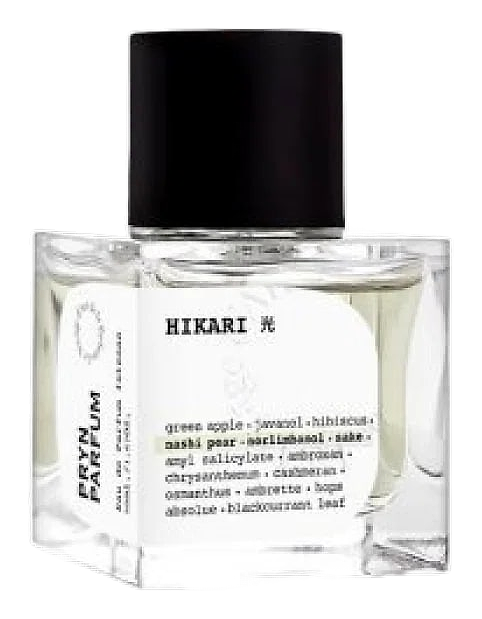
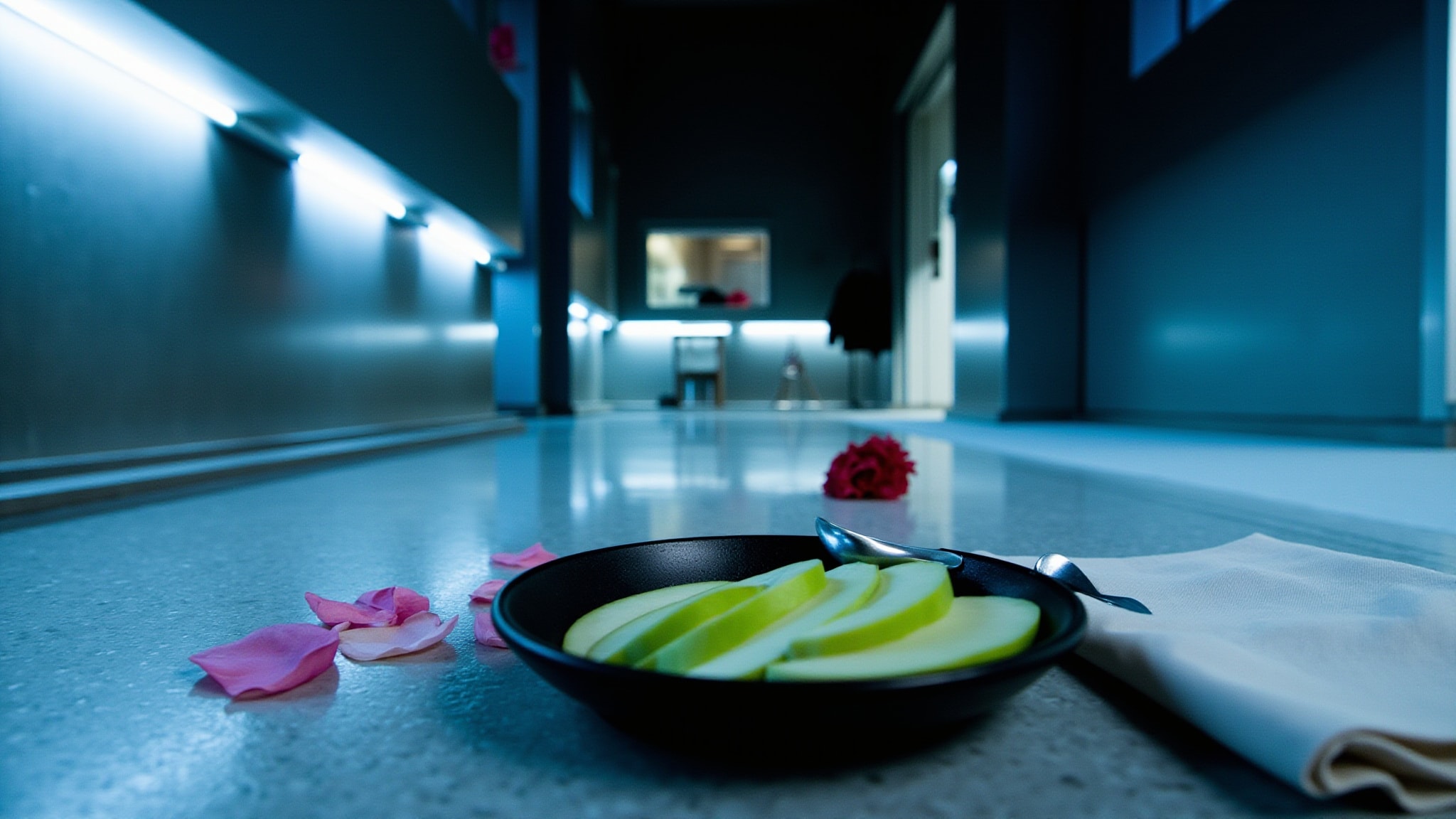
Hikari, the Japanese word for light, arrived in 2017 from Pryn Parfum, composed by perfumer Prin Lomros. The name lands with intention. This isn't warmth or amber sunlight; it's the clinical, synthetic gleam you get from a glass tower at dusk. The composition leans on a tension between juicy naturals and engineered molecules, sake, green apple, pear, and florals, pushed through a layer of modern aromachemicals that strip away any softness. The result feels synthetic on purpose, less like fruit in a bowl and more like fruit rendered in pixel. It's a fragrance that treats brightness as a material to be constructed rather than found, and it wears that construction proudly.
What makes Hikari structurally unusual is its heart composition. The base loads up on Javanol, Ambroxan, Cashmeran, and Norlimbanol, four materials more commonly associated with woody, skin-centric, and masculine-leaning fragrances. Pairing them with green apple, pear, and hibiscus creates a deliberate friction between sweet, lifted naturals and the clear, mineral-laced projection of synthetic musks and woods. The naturals supply sweetness and lift; the synthetics supply clarity, projection, and that almost-ozonic edge that runs underneath the whole composition.
The evolution
The opening is a bright, immediate hit. Green apple and nashi pear come in sharp and slightly candy-like, buoyed by sake that reads less like rice wine and more like a clean, almost alcoholic sweetness. The fruit notes don't sit still; they crackle with a synthetic bite that signals right away this isn't a soft, dewy composition. From there the aromachemicals start surfacing. Ambroxan arrives with its signature salty-musky sheen, and the florals, osmanthus, hibiscus, and chrysanthemum, begin to register, but filtered through that modern mineral haze rather than presenting as full, petal-like blooms. As the composition progresses, Javanol and Cashmeran take over, lending a woody, slightly skin-warm depth that feels almost tactile, as if the scent is settling into fabric rather than floating off the skin.
Cultural impact
Hikari occupies an unusual place in the fruity-floral category. It reads as fresh and bright on first encounter, but the brightness carries a synthetic, almost industrial edge that sets it apart from softer, more conventionally pretty compositions in the same family. The fruity top notes are recognizable, green apple, pear, sake, yet they're filtered through a base of woody, musky aromachemicals that give the whole thing a colder, more architectural finish. It feels closer to experimental indie releases than to mainstream fruity-floral launches, and that positioning has shaped how it's received.