The Story
Why it exists.
The beginning
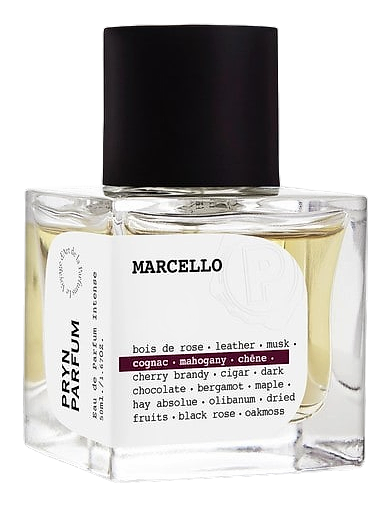
Marcello takes his name from the protagonist of Federico Fellini's 1960 film La Dolce Vita, a journalist in a tuxedo who wanders Rome's nightclubs searching for love, meaning, and something that keeps eluding him. The fragrance translates that character into scent. Not the plot. The posture. The man who walks into a room already knowing he's been forgiven for whatever comes next. Prin Lomros built the composition around cognac as the central image, the finest brandy, fermented in oak barrels, the kind of drink that signals arrival rather than thirst. Around it, leather and mahogany form the wardrobe. Oak and tobacco become the habits. Cherry brandy, dark chocolate, and black rose are the women who keep appearing in the story. The fragrance doesn't judge Marcello. It understands him.
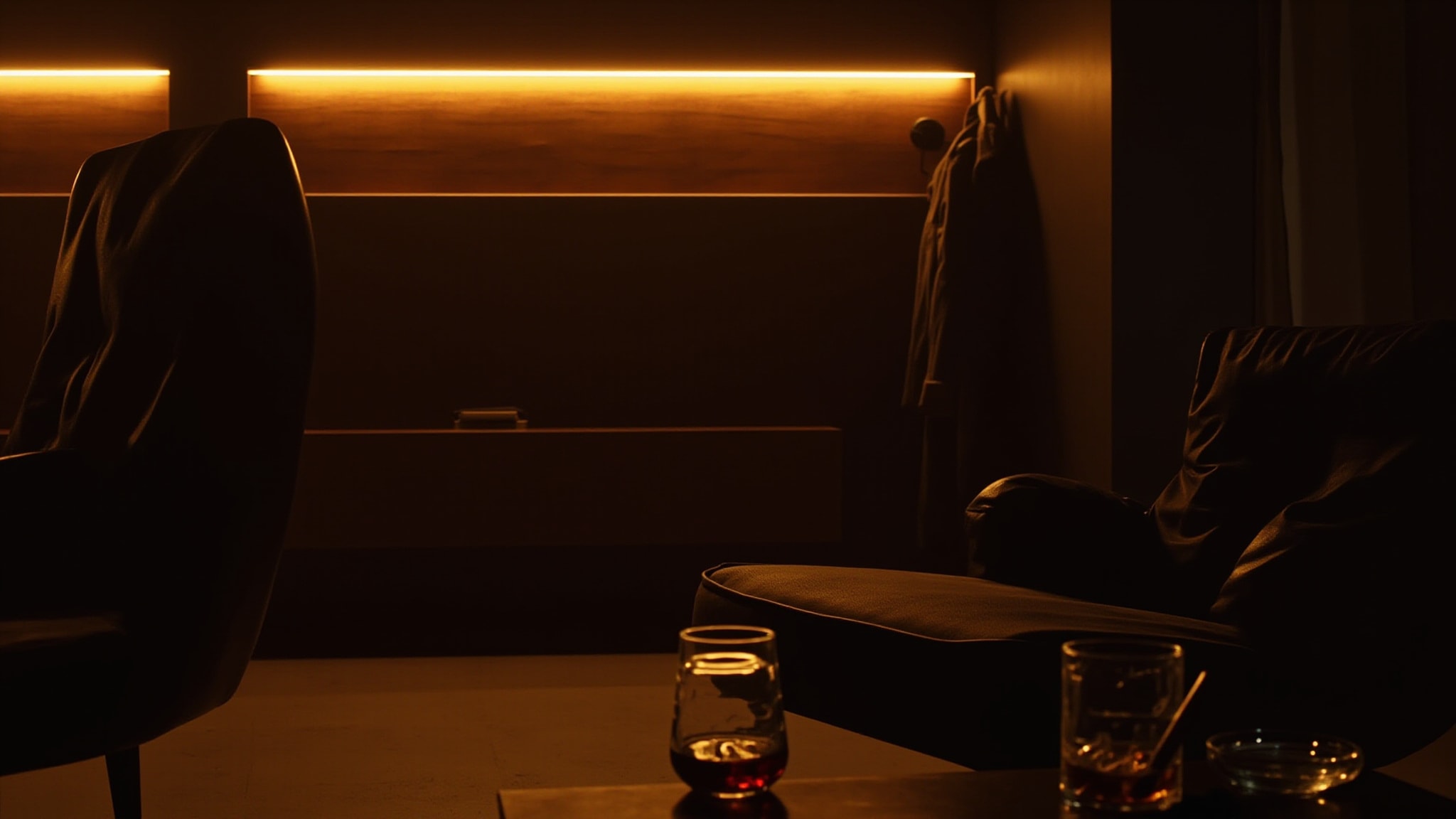
What makes Marcello interesting as a composition is how it holds two registers simultaneously, the polished and the slightly undone. Cognac opens bold, immediate, a glass already poured. Leather and mahogany settle over it like the jacket that's been draped over a chair for the last hour. Hay absolute adds warmth that reads almost as skin. Then tobacco and cigar arrive with the confidence of someone who's already said the clever thing. The dried fruits and dark chocolate keep appearing at the edges, present, then retreated, then present again. The oakmoss in the base is what remains when everything else has gone quiet. It's the wood in the room. It's what the tuxedo smelled like by morning.
The evolution
The opening announces itself without apology. Bergamot sparks against cognac and brandy, bright, boozy, the first sip. The bergamot eventually retreats and everything becomes denser. Leather takes over, mahogany follows, and suddenly the fragrance has the weight of a dark room. Oak anchors it. The hay absolute is the unexpected warmth here, the detail that keeps the whole thing from reading as merely masculine. As time passes, the cognac resurfaces. It never fully left. It sits underneath the leather now, blending into it, and the tobacco and cigar have moved to the foreground, close enough to feel the heat. Dark chocolate and black rose appear here, late arrivals that feel like a second conversation. The cherry note shows itself in the way the sweetness curls at the edges of the drydown. In the final stages, the cognac and oak are all that remain, warm, intimate, close to skin.
Cultural impact
Marcello occupies an unusual position in niche perfumery, a fragrance named for a specific cultural artifact, the 1960 Fellini film, that commits fully to the reference without irony or hedging. The cognac-forward structure places it among spirituous fragrances, though Marcello's hay absolute and tobacco combination gives it a different register, less spirituous, more rooted. What marks it as distinct is the fragrance's refusal to soften at the edges. It presents itself with an unapologetic directness, allowing the cognac to remain present throughout rather than fading into something more approachable.