
The Story
Why it exists.
The beginning
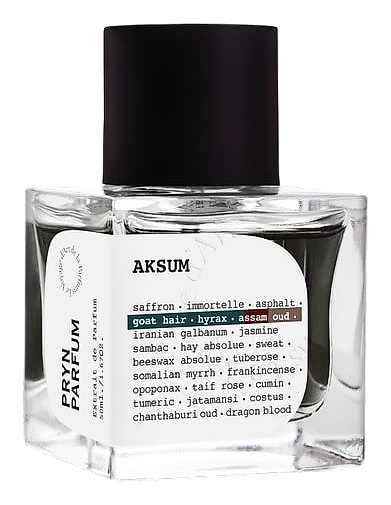
Aksum takes its name from one of antiquity's most powerful civilizations, a city that rose along Ethiopia's northern highlands and, for centuries, controlled the incense trade between Arabia, the Mediterranean, and the Indian Ocean. It was where frankincense and myrrh left Africa for temples and palaces elsewhere. Where camel caravans and merchant ships carried not just goods but ideas, Judaism, Christianity, the material cultures of half a dozen civilizations. Prin Lomros built Aksum the fragrance around that history. The 2017 composition draws materials from Somalia, Iran, Saudi Arabia, India, and the Mediterranean coast, each ingredient a descendant of the ancient trade routes the city once commanded. The choice to use both holy resins and deliberately animalic materials reflects that duality: the sacred and the profane occupying the same marketplace, the same streets, the same skin.
What makes Aksum unusual isn't any single ingredient but the combination of them. Costus root brings a distinctive animalic intensity, somewhere between barnyard and body warmth, that's rarely used at this concentration in modern perfumery. Hyraceum, a mineralized stone from African rock hyraces, functions as a cruelty-free animalic musk, adding fecal, leathery depth without the ethical baggage. The asphalt note isn't metaphorical, it recreates the actual smell of heated tar, mineral and slightly tarry, grounding the more delicate resins. Dragon's blood resin from East Africa adds a smoky, balsamic sweetness that binds everything together.
The evolution
The opening arrives like a temple at noon, incense burning hot, myrrh and frankincense at full intensity. Turmeric adds a sharp, almost medicinal brightness. Then the asphalt. Then the goat hair. For the first fifteen to twenty minutes, the fragrance is confrontational in a way that few modern perfumes risk. Then the oud settles in. Not the sanitized, woody oud of countless Western interpretations, this is Assam oud, raw and animalic, and it reshapes the composition without erasing the rawness beneath it. The floral heart emerges slowly: Taif rose, jasmine sambac, tuberose. They're sweet but not soft, playing against the costus and cumin that remain. By hour three, the drydown has settled into something skin-close and resinous. The animalic notes don't disappear, they refine, becoming warm skin rather than raw hide. Beeswax and hay absolute add a honeyed, almost dusty warmth. The oud persists, quiet now, a foundation rather than a feature. On most skin types, this lasts eight to ten hours. On fabric, it can linger for days.
Cultural impact
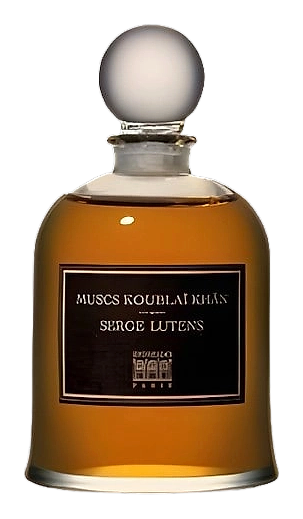
Aksum sits at the edge of the niche animalic category, not for every collector, but for the one who wants a fragrance that challenges and rewards. Those drawn to it often describe it as addictive: the initial confrontation gives way to a drydown that's unlike anything in a typical rotation. The production was discontinued, which has only deepened its cult status among those who found it. Comparable in spirit to Muscs Koublaï Khän and other confrontational animalics, though Aksum's resinous depth and geographic specificity set it apart.