The Story
Why it exists.
The beginning
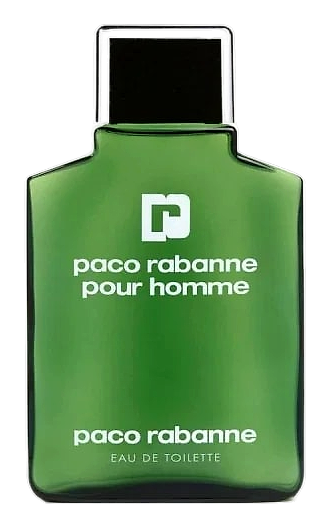
Pour Homme arrived in 1973, composed by Jean Martel for Rabanne. The brief was not to reinvent the wheel, it was to perfect one. Rabanne had already established itself as a force in fashion, known for pieces that carried sculptural weight and an impossible-to-ignore presence. The fragrance followed that same logic: confident, lasting, wearable without being loud. Martel delivered a fougère that opened with a citrus-spice jolt and closed in honey and oakmoss. Not a statement. A presence. The honey adds unexpected warmth to the base, sweetness that lingers without cloying, while the oakmoss provides that classic fougère depth that refuses to disappear. It's the kind of fragrance that knows exactly what it is.
What makes Pour Homme work is its refusal to follow convention. The clary sage and rosewood push forward from the opening, giving the composition an herbal-green quality that sets it apart. Most fougères of that era leaned heavily into lavender and coumarin, creating a fern-forward effect that was familiar but one-dimensional. Pour Homme added quiet complexity that made the structure feel three-dimensional. The honey in the heart does similar work: warm, sweet, pulling the oakmoss and musk into a cohesion that does not announce itself.
The evolution
The opening hits sharp. Rosemary and clary sage arrive first, herbal-bright and immediately masculine. The rosewood underneath gives it a spiced woodiness that separates this from simpler citrus openings. Within the first ten minutes, the composition settles, the initial sharpness softening as the heart begins to develop. The herbs remain present but recede, allowing the honey and tonka bean to emerge. By the second hour, the drydown begins its slow reveal. Oakmoss asserts itself fully, that classic fougère signature arriving with quiet confidence. Musk keeps everything close to the skin. Amber and tobacco add warmth without sweetness, creating a foundation that feels old-fashioned in the best way, intimate and animalic without being dirty. On fabric, it lasts well into the next day.
Cultural impact
Pour Homme exists in an interesting position, celebrated enough to maintain a devoted following for more than five decades, yet never quite attaining the icon status of some of its contemporaries. It is the fragrance men reach for when they know exactly what they want and do not need anyone else to recognize it. The herbal-floral heart is its calling card, the element that keeps wearers returning and newcomers slightly uncertain. In a market saturated with aquatic and ambroxan-forward compositions, Pour Homme offers something the industry stopped making at scale: a genuinely classical fougère that smells like it was composed, not assembled.