The Story
Why it exists.
The beginning
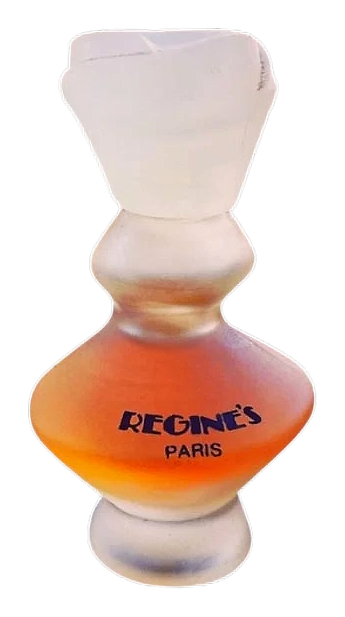
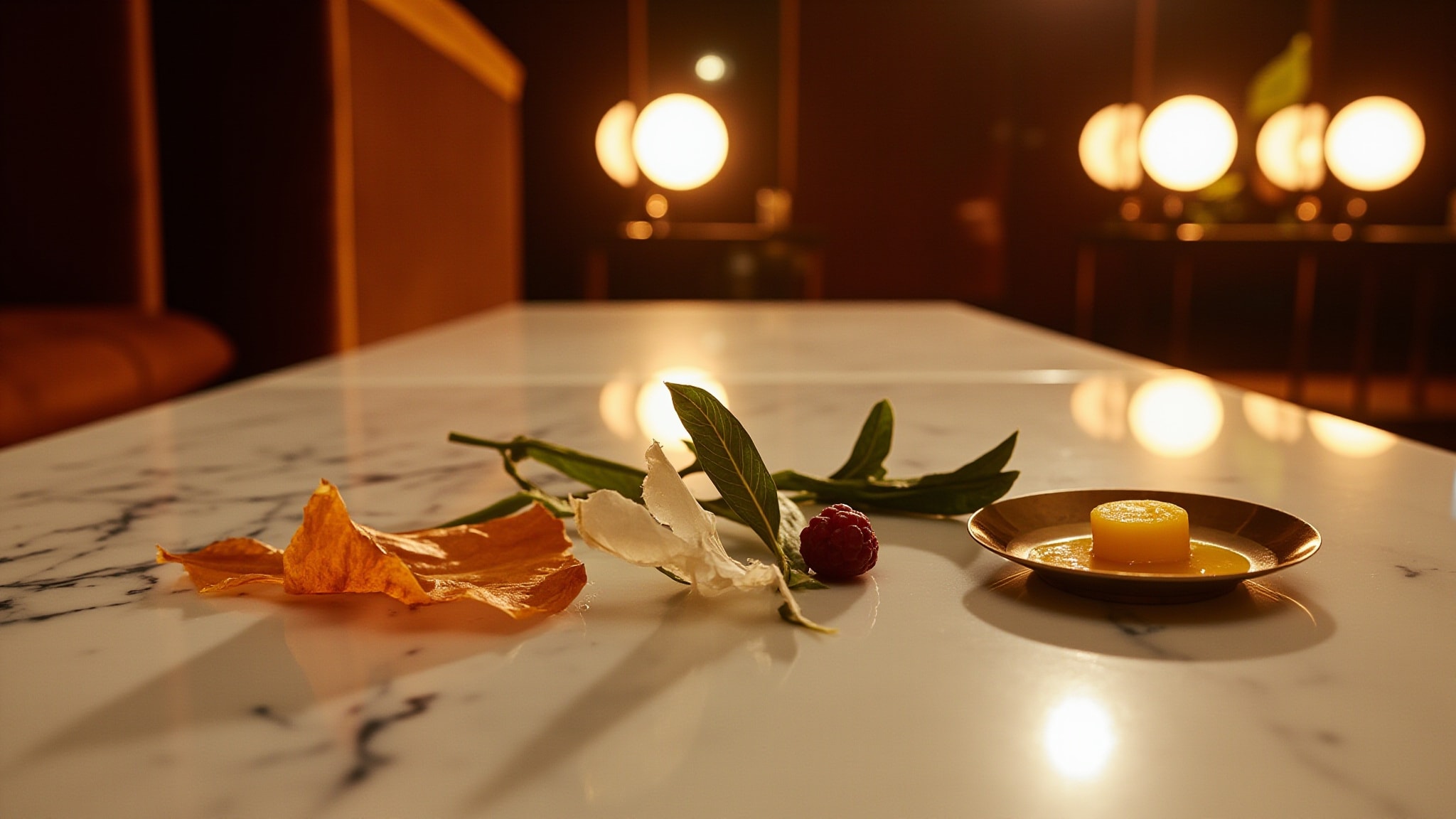
Regine's arrived in 1989, and the opening notes set an unusual stage. Orange blossom and raspberry leaf appear together, a pairing you don't encounter often in classic floral constructions. The orange blossom brings that familiar white-flower lift, slightly indolic at its edges, while the raspberry leaf introduces something greener, almost herbal, that pulls the brightness back toward earth. Right away you sense a tension between two directions: the soft, almost creamy sweetness of the blossom on one side, and the tannic, leaf-like quality of the raspberry on the other. That tension doesn't resolve quickly. As the top notes settle, the composition moves into its heart, where the orange blossom keeps its hold but begins to deepen, gaining weight from whatever florals sit beneath.
What makes the structure unusual is the beeswax absolute sitting in the heart, wedged between the jasmine, rose, and violet. Most florals of this profile rely on powdery or fruity bridges to move from top to base. Here the beeswax acts as a golden hinge, pulling the florals toward something warmer and more honeyed before the base arrives. It also explains why the sweetness never reads synthetic. The beeswax gives it a natural, slightly animal warmth that ties the orange blossom above to the amber and tonka below. Raspberry leaf in the opening is the other distinctive choice, drier and more vegetal than raspberry fruit would be, adding that green thread that keeps the sweetness honest.
The evolution
The first 15 minutes belong to orange blossom and raspberry leaf, and they arrive brighter than you'd expect from a composition this dense. The white-flower sweetness has a candied quality, almost like neroli hard candy dissolving slowly, while the raspberry leaf pulls it back from too-pretty with a faint bitterness, like tea leaves caught in the strainer. By the 30-minute mark the beeswax starts to surface. You can feel it before you can name it, a golden warmth that gathers around the jasmine and rose, making the florals feel less like a bouquet and more like something melted down. The violet adds a soft, powdery shadow underneath, giving the heart a vintage texture that suits the 1989 provenance. Around the 2-hour mark, the base asserts itself. The patchouli is present but restrained, more structure than statement, and it lets the amber, tonka, and vanilla do the heavy lifting. What surprises is how the musk works here.
Cultural impact
Regine's draws comparisons to several compositions that share its floral-oriental architecture. Montana's Parfum de Peau occupies similar territory with its dense floral center and sweet, resinous base, while Amouge's Memoir Woman pushes further into the gourmand-resinous space with its heavier base notes. Where Regine's distinguishes itself is in that opening tension between orange blossom and raspberry leaf, a contrast that gives it a distinctive character even alongside these reference points. The composition leans into dense floral structure with a base that carries sweet, almost balsamic qualities.