
The Story
Why it exists.
The beginning
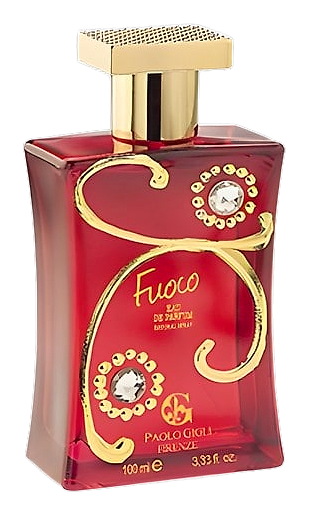
Fuoco belongs to Paolo Gigli's I Quattro Elementi collection, four fragrances named for the classical elements: Fuoco, Aria, Acqua, Terra. The premise was elemental: translate the properties of fire into scent. Fuoco took the assignment literally. Fire is the note, fire is the character, fire is the lasting impression. Bergamot and Granny Smith apple open bright, almost contradicting the name, but then the composition earns its title. Paolo Gigli built its identity on this kind of tension, the unexpected detail that changes everything. The fragrance doesn't merely suggest its element, it becomes it, inviting the wearer into that elemental intensity with every application.
What makes Fuoco work is the way the opening notes don't fight what follows, they set it off. Bergamot and Granny Smith apple, that specific citrus brightness, cuts through the composition without diminishing the depth beneath it. The result is an oriental that doesn't smother. Paolo Gigli was never interested in comfortable. Even the naming, Fuoco, Italian for fire, suggests something that transforms what it touches. The sandalwood in the base is doing quiet work, holding the whole structure together long after the citrus has gone quiet.
The evolution
The opening announces itself immediately. Bergamot and Granny Smith apple sit atop the composition bright and sharp, present for roughly the opening phase. Then the handoff arrives. Warmth rises, and with it the character that defines Fuoco's soul. This is the fire the name promises. The vanilla amplifies during this phase, sweetening the heat into something that reads as warmth rather than burn. By the later phase, sandalwood begins its work. The warmth softens without vanishing. The vanilla stays close to skin. What remains is an oriental warmth that lingers. The drydown is intimate, the kind of presence someone notices only when they're already close. Paolo Gigli positioned Fuoco as a statement piece, a fragrance that belonged to a wardrobe rather than completing one. The Elemental collection placed warmth at the center before warmth became a dominant aesthetic.
Cultural impact
Fuoco belongs to a specific moment in Italian fragrance history, when houses were experimenting with oriental compositions in ways that felt like assertion rather than comfort. The warm oriental register was not yet everywhere. Fuoco staked an early claim on warmth as an aesthetic rather than a convenience. The I Quattro Elementi collection positioned Fuoco as a statement piece, a fragrance that belonged to a wardrobe rather than completing one. Paolo Gigli understood that choosing boldly and wearing it without apology creates its own kind of presence.