The Story
Why it exists.
The beginning
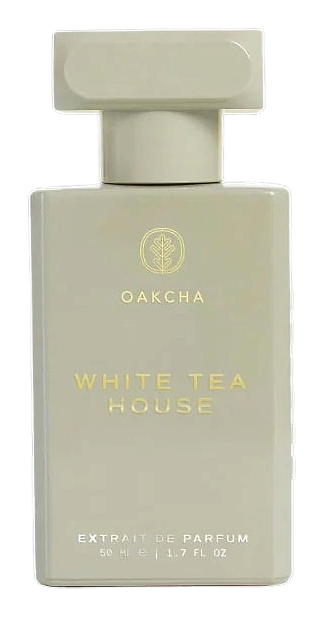
White Tea House arrived in 2026 as part of Oakcha's Tea Collection, a category built around compositions inspired by tea in its many forms. The brief reads like a quiet room. Soft. Airy. Contemplative. A fragrance that behaves like the steam from a freshly poured cup in early light, warm enough to notice, translucent enough to disappear. Oakcha built this one for the wearer who treats fragrance as a layer of skin rather than a costume. The vegan formulation keeps the ingredients lean, letting the chosen notes speak without interference. The scent opens with a lifted quality, carrying white tea alongside citrus that brightens without becoming sharp. Clary sage threads through the top, giving the blend an herbal current that keeps the airy quality grounded.
What makes this composition worth attention is the way it splits the difference between aromatic and skin-musks. The white tea note anchors the top, but clary sage gives it herbal backbone instead of letting it slide into pure citrus cologne territory. The heart pairs iris with ambrette seed and mate, which is an unusual combination. Iris reads cool and rooty, almost powdery in the way it catches light on skin. Ambrette adds a warm, musky, almost cotton-like haze, the kind of softness that diffuses rather than radiates.
The evolution
The opening is quick and lifted. Citrus notes, white tea, and clary sage set up within the first fifteen minutes, bright but never sharp. Sage grounds the citrus so the tea character doesn't read as generic bergamot water. As the first hour turns, the citrus fades and the middle notes take over. Iris arrives cool, almost powdery, and mate adds a leafy warmth, like the bottom of a steeped teacup. Ambrette seed works through the center, giving the composition a soft musk that feels like cotton or clean skin more than anything synthetic. By the third hour, the base has settled. Amber, tonka bean, and white musk close the arc, warm but not heavy. The composition continues to shift in subtle ways past this point. The ambrette from the heart blends into the white musk of the base, creating a continuous softness that carries through the late drydown.
Cultural impact
White Tea House reflects a moment where clean, skin-adjacent compositions have started to resonate with a broader audience. The fragrance lives in the space between perfumery and personal care, a category where the line between grooming product and fine scent has grown increasingly porous. Wearers reach for compositions like this when they want something present but unobtrusive, a layer of scent that complements without dominating. The Tea Collection itself sits within a wider movement of tea-inspired fragrances that treat the material as more than a passing note.