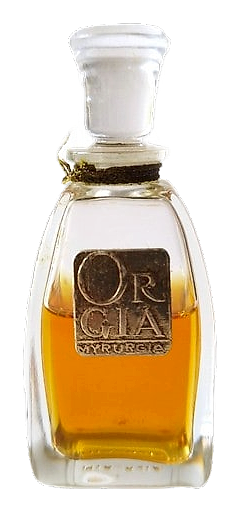

The Story
Why it exists.
The beginning
In 1922, Myrurgia released L'Orgie into a Barcelona that still hummed with creative energy. The perfume house had grown from something modest into a city favorite. Aldehydes provided lift, that first-moment clarity. The florals beneath were meant to unfold. Rose and lily of the valley don't rush. They wait for warmth. The original bottle was designed with clean lines and purpose, so the fragrance itself could do the talking. The aldehydic brightness opens like a curtain rising, introducing the layered florals that follow. There's a deliberate contrast between the sharp top notes and the softer blooms beneath, a tension that makes the scent feel alive rather than static.
The aldehydic structure was deliberate. This chemical family carries a particular character, waxy and effervescent, lifted. L'Orgie uses that brightness as architecture, not decoration. The floral heart isn't subtle either. Multiple blooms at once, competing for attention, held in check only by the aldehydic framework above and the warm, slightly powdery base below. It's abundance without collapse. Oakmoss in the drydown adds a darker, more complex character, a depth that emerges as the top notes settle.
The evolution
The aldehydes hit first. Bright, almost sharp, champagne before the glass touches the table. Citruses follow, but they're there to soften, not dominate. Within minutes, lily of the valley arrives. That green, sweet little bell of a note that blooms as the aldehydes begin to settle. Then the rose. Slow. Not rushing anything. The base notes start their slow climb. Musk and vanilla emerge gradually, warming the florals from within. The drydown belongs to oakmoss and vanilla, with the tonka bean keeping everything soft and warm. The composition maintains its character as the florals fade, the base holding its own distinct presence.
Cultural impact
L'Orgie arrived in 1922, a time when aldehydic compositions were gaining attention for their bright, lifted qualities. The composition features bright top notes, generous florals, warm powdery bases. The aldehydic structure and oakmoss-heavy base represent the aesthetic of that period. The source description captures it simply: a lot of flowers, lots of lights, lots of love.