
The Story
Why it exists.
The beginning
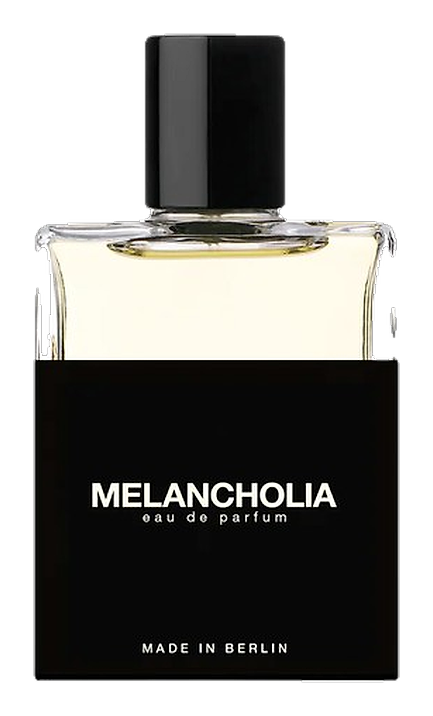
The brief was simple and brutal: plain tragedy of existence. Mark Buxton built Melancholia around that specific emotional register, the recognition that arrives too late. Violet leaf and lily of the valley carry the 'moment,' that thin slice of awareness when you understand something has already passed. Clearwood and pyrogenic incense anchor the sentiment so it doesn't float away, unmoored. Dates and blackcurrant occupy the heart, sweet and sticky, but the narcissus keeps pulling them back toward something bitter, something real. There is a war between opposites throughout the formula. Sweetness keeps threatening to win. It never does. That tension is the scent.
What makes Melancholia unusual is how it refuses to resolve. The green apple and bergamot brighten the top, but the violet leaf and blackcurrant keep pulling back toward tartness and dark greens. The dates suggest something syrupy and edible, but the narcissus absolute introduces a bitter, almost animalic edge that undoes the sweetness before it settles. Clearwood appears in the base alongside cade juniper.
The evolution
The opening arrives restrained. Green apple and blackcurrant provide a brief, bright lift before the violet leaf announces itself, that distinctive green, slightly bitter character that signals something more serious is coming. Bergamot adds a citrus edge but it is gone quickly, leaving the green-fruity tension unresolved. The heart opens slowly. Lily of the valley brings a cold, waxy floral quality that does not soften the composition, it heightens the tension. Dates sit in the background, sweet and sticky, but the narcissus absolute keeps pulling everything back toward bitter and animalic. There is a constant push and pull between sweet and sharp that makes the mid-section feel like a standoff. The drydown is where the smoke finally arrives. Incense and Clearwood assert themselves with a charred, almost pyrotechnic quality. Vetiver adds earthy depth.
Cultural impact
Melancholia presents a unique approach to fragrance. The combination of blackcurrant, green apple, narcissus, and smoke creates a composition that defies easy categorization. Some wearers find it arresting and deeply original, others find it austere and off-putting. The fragrance rewards wearers who engage with complexity rather than avoiding it.
The House
Moth and Rabbit PerfumesMoth and Rabbit creates contemporary niche fragrances that read like short films. Founded in Berlin in 2016 by Elke Filpes and Christian Choi, the house treats scent as a narrative medium, turning cinematic moments into olfactory stories. Each bottle invites the wearer to step into a scene, whether it is the restless energy of a teenage romance or the quiet tension of a midnight shoreline. The brand balances experimental composition with a clear, minimalist aesthetic, making every launch feel like a fresh script waiting to be performed on the skin.
The Creator
Mark BuxtonMark favors a structural approach that starts with a strong base, often built from rare woods, ambergris substitutes, or aged resins. He layers these foundations with carefully selected heart notes—spices, florals or herbs—that add depth without overwhelming the base.