The Story
Why it exists.
The beginning
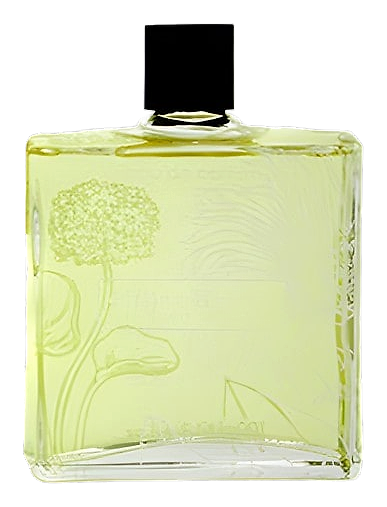
Miller Harris launched En Sens de Bois in 2005, a release that established the house's reputation for treating wood as subject matter rather than accessory. The name translates roughly from the French as "in the sense of wood," an invitation to read the material literally rather than abstractly. Where most woody fragrances of the era chased exotic timber through smoke and spice, this one stayed closer to the source. The composition asks what a forest actually smells like before it becomes a metaphor: root, needle, bark, the hum of resin drying on a warm afternoon. Lyn Harris built the early Miller Harris portfolio around this kind of narrative thinking, letting each fragrance occupy a specific place or feeling rather than a market category.
The unusual starting point is carrot seed, an aromatic that smells closer to damp earth and dry leaves than anything you'd find in a kitchen. It does the work most fragrances assign to pepper or clove, adding a raw, slightly bitter edge, but without the sweetness. Paired with iris, which here reads as cold powder rather than lipstick, the opening sets up a tension between the cultivated and the wild. The heart shifts into pine and ambrette, a musk mallow that provides an almost skin-like warmth without resorting to anything animal. The base is where the composition truly settles, a dense weave of cedar, vetiver, sandalwood, labdanum, frankincense, patchouli, and amber.
The evolution
The first thirty minutes belong to the carrot seed and iris, an almost austere combination that smells like the floor of a workshop where someone has been planing wood all morning. There's a raw, slightly dusty quality that catches you off guard. It's not pretty in the conventional sense, but it's precise. Then the pine arrives, and with it a shift from cool to warm. The ambrette underneath starts to do its quiet work, adding something that reads less like a note and more like the temperature of a room. By the two-hour mark, the iris has fully retreated and the composition has settled into its base register. Cedar and vetiver take the lead, smoky and dry, while the frankincense and labdanum add a low, resinous hum underneath. The sandalwood softens the edges without sweetening the whole thing.
Cultural impact
En Sens de Bois sits within a generation of woody compositions that prioritized atmosphere over statement, and its cult following reflects that. Wearers tend to describe it in spatial terms: a workshop, a forest, a quiet room. It appeals to the kind of fragrance enthusiast who reads notes lists the way other people read wine labels, and who values transparency in materials over trend-driven packaging. Within the Miller Harris portfolio, it represents the house's more austere, material-focused side, a counterpoint to the floral and gourmand compositions that followed.