The Story
Why it exists.
The beginning
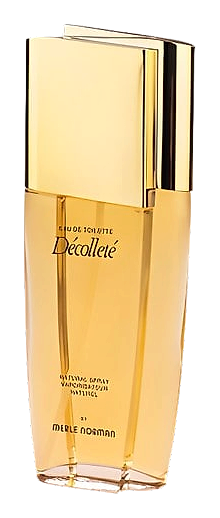
Decollete arrived in 1987 from Merle Norman, a cosmetics house better known for its color products than for scent. The company built its reputation in the color space before ever stepping into fragrance, which made the launch of Decollete a deliberate move rather than an obvious one. An eau de toilette, Decollete was the answer to a simple question: what does a floral smell like when it isn't trying to impress anyone? The composition is straightforward and built around a short, intentional list: tangerine, bergamot, rose, jasmine, tuberose, and a soft woody bed. No mystery ingredient. No obscure material to decode. Just a composition that reads clean from the label and smells clean on the wrist.
What's interesting about Decollete is how little it tries to do. The pyramid is small and the materials speak with no competition from supporting notes trying to steal attention. The citrus top is brief, bright, and then it's gone. The heart is where everything lives: rose doing the structural work, jasmine adding its sweet edge without tipping into anything heavy or indolic, tuberose stepping in with that creamy, almost soapy weight that makes a white floral feel grounded rather than floaty.
The evolution
On skin, Decollete opens with a quick burst of tangerine and bergamot, the kind of citrus that feels cold for about two minutes before warmth starts tugging at the edges. That first phase is bright, almost snackable, and easy to mistake for a lighter eau de cologne than what follows. By the thirty-minute mark the rose has already arrived. It's not shy. The rose reads clean and slightly powdery, lifted by a jasmine that adds a green sweetness without going indolic. Tuberose shows up somewhere in the second hour, rounding out the heart with that creamy, almost coconut-adjacent weight it carries when it isn't competing with heavier florals. The woody base settles in last and does its job quietly, holding the composition to skin without ever announcing itself.
Cultural impact
Decollete sits in a quiet corner of the late-1980s floral category. It's a composition that knows exactly what it wants to be and refuses to expand past that brief. Where heavier fragrances of the era leaned on dense bases and dramatic projection, Decollete kept its structure small and its delivery close to the skin. The florals do the talking: a clean rose at the center, jasmine adding sweetness, tuberose bringing cream, and a woody base doing the quiet work of holding it all in place. That simplicity is what gives the fragrance its staying power.