The Story
Why it exists.
The beginning
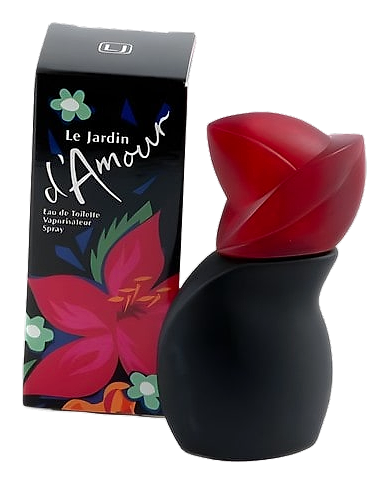
Le Jardin d'Amour arrived in 1986 as a flanker to the original Le Jardin, which had launched four years earlier as Max Factor's signature green floral. Where the original leaned into fresh, dewy botanicals, Le Jardin d'Amour took the garden concept and turned it toward something warmer, more romantic. The name itself is a statement of intent: a garden of love, translated into scent for the Max Factor woman who wanted her fragrance to feel like an invitation.
The composition leans heavily on a classic 80s move: aldehydes as a delivery system for rose. Aldehydes don't just add scent, they alter how other molecules hit the skin, making florals feel rounder, more luminous, less linear. Here, that aldehyde lift carries a rosy opening that's fruity almost immediately, as if someone scattered fresh petals over a vanity table. The heart doubles down on rose but introduces ylang-ylang and orris root to give it weight, while the base uses sandalwood, vanilla, and tonka to build a warm, powdery foundation that outlasts the aldehydes themselves. The result is a fragrance that behaves like its era: confident, floral, and unabashedly feminine.
The evolution
The opening is the event. Aldehydes arrive bright and slightly soapy, lifting everything that follows into the air. Within minutes, rose and fruity notes push through, sweet and warm, while the aldehydes begin their slow descent. By the time you hit the thirty-minute mark, the ylang-ylang has taken over the heart, adding a creamy, almost narcotic warmth that bridges the top and base. The drydown is where this fragrance earns its age: sandalwood and vanilla create a powdery warmth that stays close to the skin for hours, with just enough musk to keep it human. On fabric, expect it to last well into the next day. On skin, count on four to six hours of that warm, powdery finish.
Cultural impact
Le Jardin d'Amour sits comfortably within the aldehydic floral tradition that defined 1980s feminine perfumery. Its combination of rose, aldehydes, and a warm powdery base reflects a moment when mainstream fragrance leaned into bold, recognizable florals rather than the more restrained compositions that followed. For wearers who remember that era, the scent carries a specific nostalgic charge. For newer noses, it offers a window into what '80s glamour smelled like before the decade became a punchline.