The Story
Why it exists.
The beginning
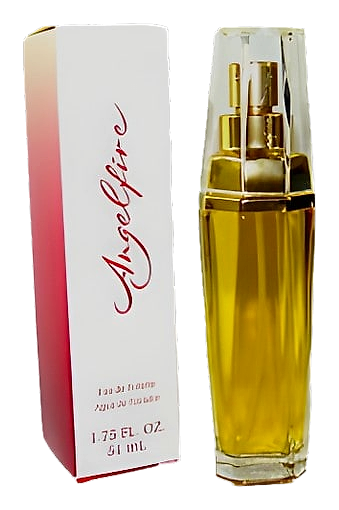
Angelfire arrived in 1977 as Mary Kay's first fragrance, a deliberate step beyond cosmetics into scent. The name suggests something luminous and ephemeral, fire that burns without consuming. The brand's philosophy at the time centered on accessibility: beauty products that ordinary women could sell to ordinary women, without gatekeepers or exclusive department store placement. Angelfire had to fit that model. Approachable but not forgettable. Warm enough to build loyalty, bright enough to introduce a stranger to the idea that Mary Kay could do fragrance. The composition reflects this balance. No dramatic gestures, no singular shock ingredient. Instead: galbanum and citrus for an opening that reads fresh without screaming. White florals, jasmine, rose, lily of the valley, tuberose, that layer rather than overwhelm. Musk, vetiver, sandalwood for a base that lingers without projecting. It was designed to be worn, not analyzed.
The green-floral-chypre structure is straightforward, a classic pyramid with no tricks. But the interplay between layers is where Angelfire earns attention. Galbanum opens sharp and green. Bergamot and lemon add brightness without sweetness. The heart combines jasmine, rose, and lily of the valley in a soft, powdery balance, with tuberose adding a slightly waxy, heady richness that prevents the florals from reading as delicate. The base, musk, vetiver, sandalwood, keeps everything grounded and close to the skin. The result is a fragrance that works through restraint rather than impact. Each layer supports the others rather than competing. The green fades first, over the first hour. The florals deepen and hold.
The evolution
The opening hits bright and green, galbanum and citrus, bergamot and lemon. Crisp. The kind of freshness that announces itself without trying. It lasts roughly an hour before the florals take over. At the heart, the jasmine, rose, and lily of the valley arrive together, quietly. Not dramatic. The powdery softness is already present here, a texture that builds underneath the petals. As the hour turns, the tuberose becomes more apparent, lending its characteristic waxy richness to the composition. The green is gone by now. The florals are in full conversation. The drydown strips back to essentials. Musk. Vetiver. Sandalwood. The florals thin but don't disappear, jasmine lingers, softened by the powder that started in the heart and hasn't left. Vetiver keeps it earthy, warm, grounded. On fabric, you might catch a trace of that opening citrus the next day. On skin, it stays close and clean, intimate, not announcing. The kind of fragrance that someone notices only when they're standing next to you.
Cultural impact
Angelfire belongs to a quieter moment in American fragrance history, the late 1970s democratization of scent, when perfume stopped being exclusively aspirational and started being personal. It wasn't positioned against niche houses or designed to compete with European heritage brands. It was a first fragrance from a cosmetics company that wanted to extend its relationship with customers into a new category. The cultural impact is modest by design. What remains is a period piece, powdery, green, floral, and hard to find since its discontinuation. For those who remember it, it carries the particular weight of personal association.