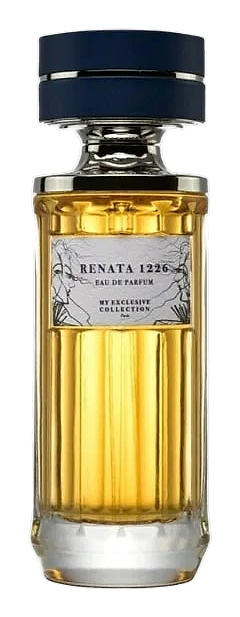

The Story
Why it exists.
The beginning
Renata 1226 arrived from M.E.C, a label whose compositions carry the unmistakable signature of Jean-Paul Guerlain. There's a particular confidence in how the brand approaches perfumery, a willingness to let ingredients speak through layered construction rather than chasing trends. The title itself feels considered. Renata 1226 reads like a name attached to a date, the kind of pairing that invites curiosity without giving everything away. M.E.C's early releases leaned on Guerlain's hand at the accord, translating narrative instincts into actual bottles. Renata 1226 sits within that first chapter of the house's output, a composition that showcases the perfumer's range. The opening pulls you in with a cool marine shimmer from calone, sharpened by lemon and the gentle sting of pink pepper.
What makes this composition worth a second look is the tension at its center. Calone, a molecule famous for giving fragrances that cool marine shimmer, sits in the opening alongside lemon and pink pepper. Then the heart swings tropical with coconut and creamy white florals like datura and ylang-ylang, a pairing more common in sun-drenched soliflores than in spicy-oriental builds. The base grounds it with Haitian vetiver, patchouli, and Peru balsam, then sweetens just enough with vanilla.
The evolution
The first ten minutes belong to lemon, pink pepper, and calone. That marine-watermelon snap hits immediately, cool, almost metallic, like biting into something chilled and salted. It's bracing, the kind of opening that wakes the skin up. Within twenty minutes, the temperature shifts. Datura and ylang-ylang push through with a creamy, almost fruity sweetness, and the coconut arrives not as a suntan-lotion blast but as a quieter haze, almost lactonic. The green sharpness softens but never fully disappears. Around the two-hour mark, the composition has settled into its base architecture: Haitian vetiver brings a smoky-earthy dryness, patchouli adds depth without going hippie, and Peru balsam weaves in a warm, vanillic resin. The vanilla is present but never dominant, more a sweetness that holds the structure together than a gourmand statement. Projection peaks in the first two hours, then tightens into a personal bubble that stays close to the skin for the next six.
Cultural impact
Renata 1226 draws comparisons to Tom Ford's Black Orchid, a composition some fragrance enthusiasts mention when describing its character. The calone opening and the creamy-coconut heart give it a distinctive tropical-leaning profile that sets it apart from more conventional spicy-oriental builds. It rewards attention from wearers who appreciate how the ingredients interact rather than chasing a single dominant impression. The fragrance wears close to skin in a way that feels intimate, almost like it's revealing itself slowly.