The Story
Why it exists.
The beginning
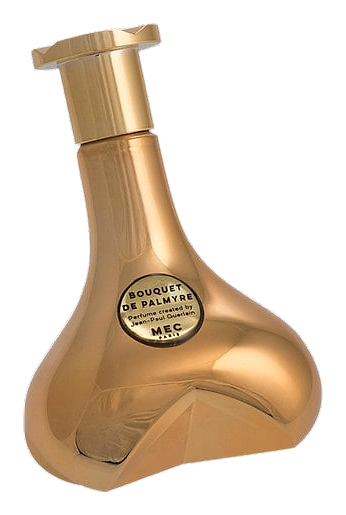
Bouquet De Palmyre takes its name from Palmyra, the ancient Syrian oasis city that once served as a meeting point between empires. Jean-Paul Guerlain composed the fragrance, drawing on a long fascination with Orientalist painting and the Levant's deep perfume history. The scent is conceived as a tribute to that crossroads, a place where precious Levantine essences converged over centuries of trade. The composition pulls from raw materials tied to the same geographic lineage, arranged into a single, dense bouquet that holds the heat and resin of its source. There is a sense, throughout the wear, that the fragrance is reaching backward, toward the caravan stops and incense burns that defined the route. Guerlain's hand keeps the references grounded rather than costume-like.
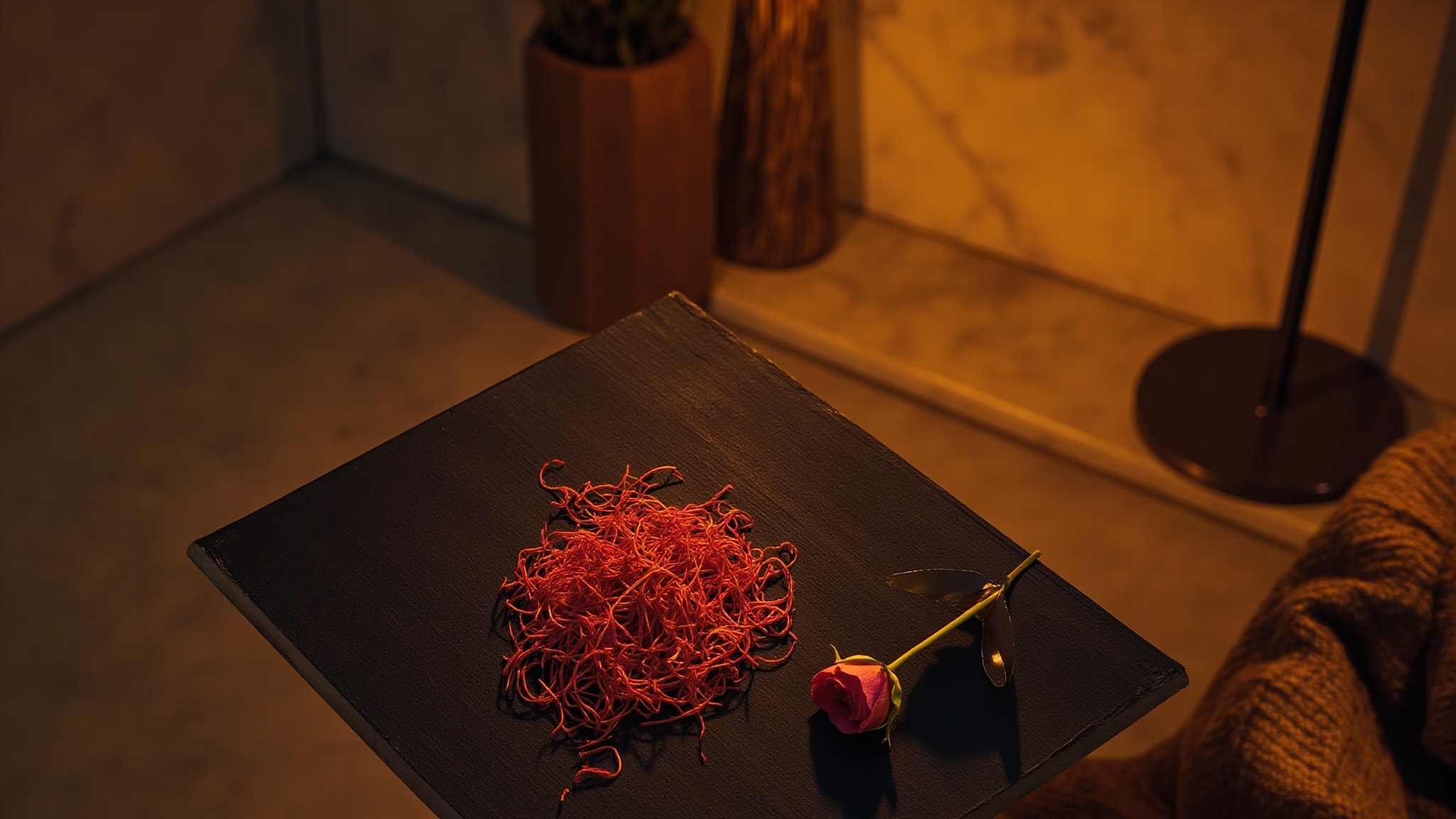
What sets this composition apart is the specificity of its raw materials. Syrian saffron, Somali frankincense, Tunisian myrtle, Turkish rose absolute. Each note arrives with a place attached to it, a geographic anchor that shapes how the material reads on skin. The chamomile and French hay in the base pull the composition slightly herbal and sun-dried rather than purely resinous. This counterweight keeps the rose from going syrupy and gives the incense a green, almost meadow-like undertone that softens the heavier elements.
The evolution
The first fifteen minutes are loud and bright. Brazilian orange cuts through saffron and marigold with a sharp citrus heat, the kind that stings the back of your nose. Guatemalan cardamom hums underneath, green and slightly mentholated, adding a cool edge to the opening burn. By the thirty-minute mark the orange has faded and the saffron settles into a leathery, almost smoky register that feels closer to cured tobacco than to spice. The heart opens properly: frankincense arrives like church smoke blown sideways, dense and resinous, and the Turkish rose absolute shows up thick and jammy, not powdery. Tunisian myrtle threads between them with a clean herbal snap, the kind of green sharpness that wakes the composition up. Geranium adds a bitter green facet that keeps the whole accord from collapsing into sweetness, acting almost like a bracing note tucked behind the rose.
Cultural impact
Bouquet De Palmyre earns its place through the seriousness of its materials. The named origins for saffron, frankincense, and rose aren't decorative. They reference the actual Levant, the routes along which these materials moved for centuries before reaching European perfumers. That grounding gives the composition a different kind of weight than fragrances that gesture vaguely toward 'oriental' traditions. The chamomile-hay drydown is what makes it land as something distinctive rather than familiar. Most compositions that lean this heavily on rose and incense tend to settle into a thick amber register in the final hours.