The Story
Why it exists.
The beginning
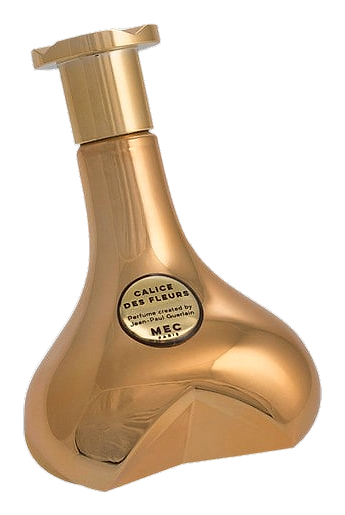
Calice des Fleurs arrived in 2017 from M.E.C, a French fragrance house. The fragrance takes its name from the rhythms of Alfred de Musset's poem "Lucie," a text the perfumer counts among his most cherished. The poem's cadence, its slow unfurling imagery and the quiet ache beneath its surface, offers a kind of blueprint for how the scent itself behaves on skin. Rather than opening with a crowd-pleasing flourish, Calice des Fleurs begins in a register that asks you to lean in. The galbanum at its front edge carries a green, almost bitter signature that feels deliberate rather than decorative. It's the kind of opening that rewards patience, the sort of composition where the first ten minutes matter as much as the hours that follow.
What makes Calice des Fleurs worth pausing over is the tension at its center. The opening leads with Persian galbanum, a resin so sharp and vegetal it reads almost bitter in the first seconds. This one lets it stand, then pivots into Egyptian jasmine and mimosa, a pairing that carries both radiance and a powdery hush. The galbanum doesn't fade so much as it recedes into the background, a cool vegetal current that runs beneath the florals like a stream beneath a meadow.
The evolution
The first ten minutes belong to galbanum, unmistakably, with bergamot and mandarin orbiting around it like light around a blade. There's a green, almost bitter signature that feels less like a flower and more like a garden in the early hours, before the sun fully arrives. The galbanum has that distinctive sharpness, a green pungency that snaps against the citrus, and the bergamot and mandarin add a brief sparkle, bright and zesty, before the deeper green takes hold. By the thirty-minute mark, the sharpness recedes and the jasmine steps forward, lifting the composition into something warmer and more recognizably floral. Mimosa brings a soft, powdery texture underneath, and clary sage adds an herbal murmur that keeps the heart from going sweet.
Cultural impact
Calice des Fleurs sits in an unusual position, composed by a perfumer whose name carries decades of institutional weight, yet released through a house that operates outside the most familiar commercial channels. The galbanum-led structure appeals to wearers who want a floral with an edge, something that opens with a vegetal sharpness before settling into creamy jasmine and powdery mimosa. It's a composition that asks to be experienced up close rather than worn as broadcast.