
The Story
Why it exists.
The beginning
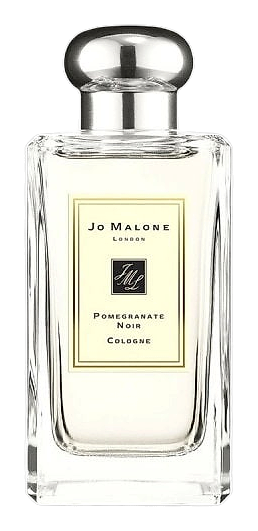
Beverley Bayne created Pomegranate Noir in 2005, working with Jo Malone London's signature layering concept as her framework. The brief was clear: take a fruit noted for its ruby richness and anchor it in something darker, smokier, and more resinous than the brand's typical delicate florals. Bayne wasn't interested in a straightforward fruity fragrance. She wanted the pomegranate to carry weight, to be the kind of fruit that stains your fingers and lingers on the tongue. The result is a cologne that leans into warmth and shadow rather than the brightness Jo Malone London is best known for.
The ruby richness of pomegranate is what anchors this whole composition, it's the literal inspiration for the name and the driving force behind the fragrance's character. Without that fruit, it's just another woody-spicy blend. With it, you've got something that balances the bright and the dark, the sweet and the smoky. The smoky base doesn't try to hide the fruit but frames it, giving the fragrance its particular character. There's something almost contradictory about it, bright and dark at once, juicy and smoky. And it's held up well since 2005, which says something about how balanced the whole thing is.
The evolution
The opening burst of pomegranate juice and rhubarb hits immediately tart and bright, that sharp, almost medicinal quality that catches you off guard before the sweetness arrives. Plum and raspberry follow close behind, adding a syrupy roundness that tempers the edge. Watermelon appears briefly, cool and watery, before the heart takes over. The transition isn't gradual. Clove and pink pepper announce themselves with warmth, and suddenly the fragrance has weight. Lily of the valley and jasmine arrive mid-phase, lending a floral softness that threads through the spice. But it's the guaiac wood, frankincense, and opoponax that shape the heart's real character, smoky, warm, resinous. This is where the pomegranate noir in the name earns its keep. The drydown strips everything back to cedarwood, patchouli, amber, and musk. The fruit is gone. The spice settles. What remains is close, quiet, and intimate, woods and resin that stay within arm's reach for hours. On fabric, the patchouli and cedar will announce themselves the next morning.
Cultural impact
Pomegranate Noir has quietly become one of Jo Malone London's most enduring scents since its 2005 launch. It stands apart from the brand's lighter, more delicate fare, darker, smokier, with a fruity character that leans into autumn and winter rather than spring. Wearers who connect with it tend to describe it as the fragrance that made them understand why Jo Malone London charges what it does.
The House
London FragrancesLondon Fragrances captures the spirit of a city in constant motion, translating the fog-wrapped streets, manicured gardens, and quiet grandeur of the British capital into wearable compositions. The house draws from London's layered history, blending time-honored raw materials with a distinctly modern sensibility. Each fragrance arrives in packaging that nods to the city's architectural heritage, making the collection feel like something discovered in a curated Mayfair boutique rather than a mass-market shelf. The brand has built a reputation for scents that feel simultaneously intimate and expansive, like wandering through a private members' club where the fireplace still burns and the whisky is always poured. London Fragrances speaks to those who find meaning in place and memory, who understand that a city can be both muse and medium.
The Creator
Beverley BayneBayne's signature work with Molton Brown, particularly Orange and Bergamot, reveals a preference for bright, citrus-driven compositions with clean structural lines. Her background in functional fragrance has sharpened her ability to create scents that perform consistently acro…