The Story
Why it exists.
The beginning
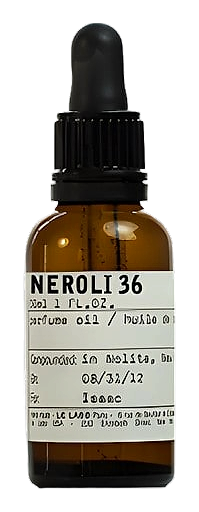
Neroli 36 arrived in 2012 from Le Labo's perfumer Daphné Bugey, and joined a lineup where every scent carried a number indicating the total count of ingredients. The number signals a layered composition, one that builds toward a sun-soaked vision of orange blossom, the delicate essential oil distilled from the bitter orange tree's flowers. Bugey built the fragrance around one of perfumery's most familiar materials, letting it serve as the center of gravity for everything else. The result is a composition that treats neroli not as a fleeting top note but as the structural spine of the entire scent, a single material given room to unfold across dozens of supporting voices rather than rushing past in the first ten minutes.
Neroli is orange blossom, but not quite. It's a specific extraction of the bitter orange tree's flowers, and in Neroli 36 it reads with a softness that feels almost candied, less sharp than many neroli-forward compositions. Bugey surrounded it with mandarin for brightness, then layered jasmine and rose into the heart, not to compete but to amplify the neroli's floral warmth. The base of musk, vanilla, and tonka bean is what transforms it from a simple soliflore into something more dimensional, adding a skin-like intimacy that keeps the citrus from feeling fleeting.
The evolution
The opening is all neroli, bright and almost green, like running your fingers through orange blossoms still on the tree. Within 15 minutes the mandarin's juicy sweetness surfaces alongside it, lending a candied edge before settling. By the 30-minute mark, jasmine and rose arrive in a soft white-floral hush, less a dramatic shift than a deepening. The drydown is where this earns its reputation: vanilla and tonka round everything out into a warm, musky close that reads almost like sunlit skin rather than perfume. The neroli never fully disappears. It ghosts through every phase, a thread connecting the bright opening to the intimate close. As a perfume oil, it sits closer to the skin than the eau de parfum version, the concentration lending it a soft, diffused presence that feels less like a fragrance being projected outward and more like something emanating from the wearer themselves.
Cultural impact
Neroli 36 occupies a quieter corner of Le Labo's catalog, a sunlit counterpoint to the smoky Santal 33 and the animalic Another 13. Where many neroli fragrances lean toward the sharp or fleeting, this one stays warm and intimate, making it a go-to for people who want orange blossom year-round, not just in summer. The fragrance has found its audience among wearers drawn to neroli's softer, more rounded expression, and it remains one of the more accessible entry points into Le Labo's numbered lineup.