The Story
Why it exists.
The beginning
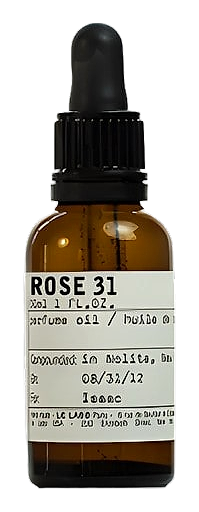
Rose 31 came from a single question: what happens when you take the most classically feminine flower and make it virile? The answer required a specific kind of audacity. Le Labo's numbered fragrances each carry a count of ingredients, Rose 31 uses 31. But the number is incidental to the real provocation. This is rose stripped of its romantic associations, rose that refuses to be anything but itself.
The construction hinges on a tension most florals avoid: the lush warmth of rose absolute against the animalic bite of cumin. Black pepper, clove, and nutmeg add heat. The heart is frankincense and amber, cedar and guaiac wood taking over. The base is oud, labdanum, vetiver. Rose has nowhere soft to land. The perfume oil amplifies this intimacy, oil sits closer to the skin than alcohol, making this virility a private matter, not a public one.
The evolution
The opening announces itself immediately. Rose absolute arrives bold, almost confrontational, then the cumin arrives behind it, grounding everything in a warmth that reads as skin, as presence, as something that refuses to be delicate. Midstream, the rose doesn't disappear. It deepens. Amber and frankincense amplify, cedar and guaiac wood taking over until the whole composition turns smoky, resinous, almost medicinal. The drydown strips everything back to something more essential. Oud's dark resin. Labdanum's animalic richness. Vetiver's earthy weight, clinging close. This is what remains six hours later. The parts that don't wash off.
Cultural impact
Since its 2012 debut, Rose 31 has carved out a specific territory: the rose fragrance for someone who hates rose fragrances. Its spicy, animalic character, a direct rejection of safe florals, became a signature for those seeking something with genuine point of view. The Perfume Oil format, introduced alongside the EDP, offers the same character in concentrated form.